- Menu
-
- English


Views: 0 Author: Site Editor Publish Time: 2026-09-30 Origin: Site


Effective airway management in tracheostomized patients relies heavily on the interface used for oxygenation and humidification. Improper selection directly correlates with increased risks of mucus plugging, hypoxia, and skin breakdown. When a patient bypasses their upper airway, they lose the natural ability to warm, filter, and humidify inspired air. Replacing this function requires precise equipment tailored to the patient's specific physiological demands.
Clinical procurement teams and respiratory care directors face a fragmented market of airway interfaces. Balancing patient acuity, anatomical variations, and strict care protocols requires a standardized evaluation framework rather than relying on default vendor preferences. Choosing the wrong device can lead to severe clinical complications, increased labor for nursing staff, and prolonged hospital stays. You need a systematic approach to evaluate these medical devices.
This guide provides a technical decision-making framework for evaluating a tracheostomy mask. We compare interface types, assess material safety, and detail how to mitigate implementation risks in a clinical setting.
Interface Matching: Selection must align with the patient’s specific humidification and oxygenation requirements, distinguishing between active heated humidification via masks and passive humidification via a tracheostomy HME filter.
Standardized Compatibility: Ensure all selected masks feature industry-standard connectors (typically 22mm OD) to guarantee secure attachment to the underlying tracheostomy tube and associated respiratory circuits.
Risk Mitigation: Prioritize masks with 360-degree swivel connectors, transparent materials for secretion monitoring, and adjustable, non-abrasive neck straps to minimize torque on the stoma and reduce tissue trauma.
Cost vs. Clinical Value: Evaluate the overall clinical value by factoring in replacement frequency, infection control protocols, supply chain reliability, and the reduction of adverse respiratory events, rather than unit cost alone.
Establishing baseline requirements for a successful interface is the first step in equipment selection. A reliable mask must consistently maintain target SpO2 levels without fluctuating during patient movement. It must also deliver adequate aerosolized medication when integrated with nebulizer systems. Preserving optimal airway humidity remains a primary objective. If the mask fails to contain and direct humidified gas effectively, the patient risks severe mucosal dehydration. You must measure success by the stability of oxygen delivery, the prevention of airway desiccation, and the seamless integration with existing hospital gas delivery systems. The interface must not introduce excessive resistance to the patient's inspiratory flow, nor should it create a reservoir for exhaled carbon dioxide.
Bypassing the upper airway fundamentally alters respiratory physiology. The nose and mouth naturally heat inspired air to a core body temperature of 37°C and saturate it with 44 mg H2O/L of water vapor. An artificial interface must replicate these warming, filtering, and humidifying functions. Without a proper mask, cold and dry gas enters the trachea directly. This exposure paralyzes the mucociliary escalator, impairing the ciliary beat frequency and preventing the natural clearance of mucus. Over time, this leads to retained secretions, squamous metaplasia of the tracheal epithelium, atelectasis, and an increased risk of pulmonary infections. The interface acts as the external replacement for the upper respiratory tract, making its thermodynamic efficiency a matter of life and death.
Mask selection directly correlates with measurable clinical endpoints. A well-fitted mask maintains appropriate humidity, which keeps secretion viscosity low. Thin secretions are easier to suction and less likely to form dangerous mucus plugs that can cause sudden airway obstruction. Conversely, a poor interface increases the work of breathing. If a mask creates excessive dead space or restricts exhalation through poorly designed ports, the patient must expend more energy to ventilate. Overall patient comfort during long-term care also depends heavily on the physical weight and fit of the device. Heavy or rigid masks cause discomfort, agitate patients, and frequently lead to pressure necrosis around the stoma site, complicating their recovery and extending their length of stay.
The transition from invasive mechanical ventilation to spontaneous breathing requires careful management. During spontaneous breathing trials (SBTs), the mask plays a critical function. It delivers the necessary supplemental oxygen and humidity while the patient assumes the full work of breathing. A seamless transition to a tracheostomy collar setup indicates progress in the weaning protocol. The interface must provide minimal resistance to airflow during these trials. If the mask feels restrictive or fails to meet the patient's peak inspiratory flow demands, the patient may fail the SBT due to anxiety or perceived dyspnea rather than true physiological respiratory muscle fatigue. Proper mask selection ensures that weaning failures are accurately attributed to patient physiology rather than equipment limitations.
Traditional masks are designed specifically for delivering supplemental oxygen and active humidification. These devices connect to large-volume nebulizers or heated humidifier bases via corrugated tubing. The design typically features a soft dome that sits over the stoma, secured by an elastic neck strap. Exhalation ports are a critical design element. These ports prevent CO2 rebreathing by allowing exhaled gas to escape freely into the ambient environment. They also help manage excess condensation by providing an outlet for moisture. When evaluating an oxygen tracheostomy mask, examine the placement and size of these ports to ensure optimal gas exchange. The ports must be large enough to prevent a continuous positive airway pressure (CPAP) effect when high gas flows are applied.
Passive humidification relies on capturing the patient's own exhaled heat and moisture. A tracheostomy HME filter contains a specialized medium, often treated paper or synthetic foam, that traps moisture during exhalation. Upon inhalation, the incoming dry air passes through this medium, picking up the stored heat and moisture. This mechanism conditions the inspired air without external water sources or heater wires. HMEs are highly preferred for ambulatory patients. They eliminate the need for heavy corrugated tubing, allowing for safe patient transport, physical therapy, and early mobilization. They are ideal for patients with lower oxygen requirements and manageable secretion volumes. However, they are contraindicated for patients with thick, copious secretions or core body temperatures below 32°C.
High-flow oxygen therapy (HFOT) via tracheostomy requires specialized interfaces. Standard masks cannot handle the high flow rates—often ranging from 40 to 60 liters per minute—without creating excessive resistance and turbulent flow. High-flow interfaces are designed to deliver precisely heated and humidified gas directly to the stoma. They must manage these high flow rates without causing dangerous pressure buildup in the lower airway. These devices often feature specialized pressure-relief mechanisms, pop-off valves, or open-system designs that allow excess flow to vent safely. Evaluating these interfaces requires confirming their compatibility with specific high-flow generator systems and heated wire circuits used in your facility.
Anatomy dictates equipment size, especially in pediatric and neonatal intensive care units. Using adult-sized masks on children creates dangerous mechanical dead space. This dead space causes CO2 retention, respiratory acidosis, and hypoxia. Age- and size-appropriate masks are an absolute necessity. Specific design alterations accommodate smaller neck circumferences and highly fragile pediatric stomas. The flanges on pediatric masks must be exceptionally soft to prevent tissue trauma to the developing trachea. The overall weight of the interface must be minimal to prevent accidental decannulation, as pediatric tubes are significantly shorter and easier to dislodge with even minor tubing tension.
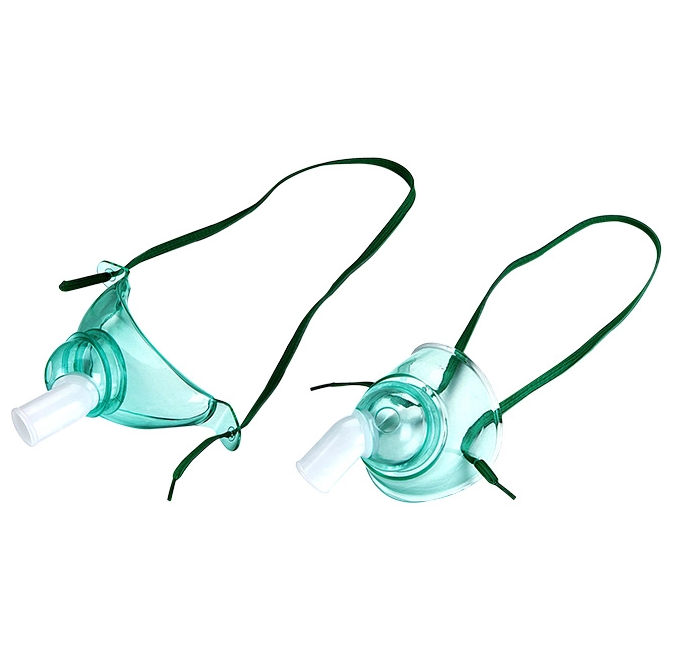
Interoperability between devices ensures patient safety and prevents catastrophic airway emergencies. You must verify adherence to ISO 5356-1 standards for medical respiratory connectors. A standard mask must feature a 22mm outer diameter connector. This ensures a leak-free, secure fit over the universal 15mm inner cannula connector of the underlying tracheostomy tube. Beyond the connector, evaluate the depth and clearance of the mask dome. A shallow dome might press directly against the tube opening, causing partial occlusion and increasing airway resistance. The mask must provide adequate internal clearance to allow unobstructed airflow and facilitate the easy passage of closed-suction catheters without requiring mask removal.
The materials used in respiratory devices directly impact patient health and tissue integrity. Assess the use of medical-grade, latex-free plastics. Phthalate-free materials, specifically DEHP-free polyvinyl chloride (PVC), are critical to prevent long-term toxicity, endocrine disruption, and allergic reactions. Evaluate the softness and flexibility of the mask flange. It must conform to diverse neck anatomies, including patients with severe edema or obesity, to prevent pressure ulcers around the sensitive stoma site. Furthermore, prioritize optically clear materials. Transparent masks allow clinicians to rapidly identify secretions, hemorrhage, or vomitus. You can perform visual assessments without removing the interface, maintaining continuous oxygen delivery and minimizing patient disruption.
Patient movement often compromises airway security. Rigid connections transfer torque directly from the heavy corrugated tubing to the stoma. Analyze the necessity of 360-degree rotating connectors. A swivel connector accommodates patient movement, such as turning the head, coughing, or sitting up in bed. It significantly reduces mechanical drag on the airway. This ergonomic feature prevents the tube from shifting within the trachea, reducing mucosal trauma, tracheal ulceration, and the risk of accidental decannulation. Tubing ergonomics play a massive role in patient comfort and safety during routine nursing care and physical therapy sessions.
The internal geometry of the mask affects therapy delivery. Measure the dead space volume of the mask. Excessive dead space traps exhaled CO2 and dilutes incoming oxygen. This impacts the stability of the fraction of inspired oxygen (FiO2) delivered to the patient. It also affects the efficiency of aerosolized medication delivery. A well-designed mask directs nebulized particles straight into the airway rather than letting them settle on the mask walls or escape through the exhalation ports. Efficient delivery ensures the patient receives the prescribed dose of bronchodilators, mucolytics, or inhaled antibiotics, maximizing the therapeutic effect of the medication.
Patients with artificial airways frequently require diagnostic imaging, including CT scans and MRIs. Ensure the mask, swivel connectors, and neck straps are entirely free of ferromagnetic materials. Metal clips, internal springs, or metallic sizing bands pose severe hazards in an MRI environment. They can heat up, cause massive image artifacts, or become dangerous projectiles due to the strong magnetic field. Procuring strictly non-magnetic, MRI-compatible masks allows for safe, uninterrupted use during imaging. This eliminates the need to switch equipment prior to transport, streamlining hospital workflows and reducing the risk of airway compromise during critical diagnostic procedures.
Evaluation Dimension | Clinical Requirement | Potential Risk of Failure | Procurement Standard |
|---|---|---|---|
Connector Standardization | ISO 5356-1 compliant (22mm OD) | Air leaks, accidental disconnection, hypoxia. | Mandatory 22mm female connector fit. |
Material Composition | Latex-free, DEHP-free, optically clear PVC | Allergic reactions, missed hemorrhage, pressure ulcers. | ISO 10993 Biocompatibility certification. |
Ergonomics | 360-degree swivel connector, soft flange | Stoma trauma, accidental decannulation, patient agitation. | Rotational testing under tubing weight load. |
Imaging Compatibility | 100% non-ferromagnetic components | MRI hazards, image artifacts, delayed diagnostics. | MR Safe or MR Conditional labeling. |
Dead Space Volume | Minimal internal volume based on patient size | CO2 retention, diluted FiO2, poor aerosol delivery. | Specific volume limits for adult vs. pediatric SKUs. |
Choosing between active and passive systems dictates the complexity of care and the physical footprint of the equipment at the bedside. Compare the clinical efficacy of using an oxygen mask with a heated humidifier versus a standalone HME filter. Active humidification delivers optimal moisture, making it essential for patients with thick, tenacious secretions, bloody secretions, or those requiring high minute ventilation. However, it requires a heater base, sterile water bags, electrical outlets, and heavy corrugated tubing. Passive humidification offers simplicity. An HME filter promotes patient mobility and reduces equipment clutter. The trade-off exists between optimal moisture delivery and logistical simplicity. You must match the system to the patient's secretion volume, mobility status, and core body temperature.
Infection control protocols heavily influence equipment selection. Evaluate the benefits of single-patient-use disposable masks against reusable components. Disposable masks significantly lower the risk of cross-contamination and hospital-acquired infections, specifically ventilator-associated events (VAEs). They guarantee a clean interface for every application. Reusable components require rigorous cleaning, high-level disinfection, and careful tracking through the central sterile processing department. Factor in the labor hours associated with sterilizing reusable respiratory equipment, as well as the cost of chemical disinfectants. The environmental impact of disposables is higher, but the clinical safety and reduction in reprocessing labor often justify their use in acute care settings.
Procurement teams must balance inventory management with clinical needs. Weigh the benefits of procuring a single, versatile mask model for hospital-wide use. Standardization simplifies training, reduces ordering errors, minimizes SKU counts, and ensures consistent stock levels across all hospital units. However, a single model may not fit every patient. Complex anatomical presentations, such as severe neck edema, burns, or anatomical anomalies, require specialized designs. You must decide whether to stock multiple specialized designs or rely on a highly adaptable standard mask. A hybrid approach often works best, stocking a primary standard mask alongside a small, tightly controlled inventory of specialty interfaces for outlier cases.
The best clinical device is useless if it is out of stock. Assess the vendor's ability to maintain consistent stock levels. Supply chain disruptions lead to clinical shortages, forcing staff to use suboptimal alternatives that can compromise patient safety. Evaluate the vendor's manufacturing capacity, distribution network, and historical fill rates. Furthermore, evaluate the availability of vendor-provided clinical training resources. Strong vendor support includes on-site training for nursing staff and educational materials for the respiratory therapy department. Reliable partners provide both consistent product delivery and the education necessary to use the products safely, ensuring that clinical staff are competent in application and troubleshooting.
Accidental disconnection remains a primary safety concern in airway management. Poorly fitting masks or rigid tubing easily cause disconnection when a patient shifts in bed, is turned for hygiene, or is transferred to a stretcher. In severe cases, the torque can cause complete decannulation, creating an immediate airway emergency. To mitigate this risk, implement mandatory fit-testing protocols upon initial application. Utilize masks with secure, elasticized, and highly adjustable neck bands. Ensure the tubing is properly supported with securing devices or tube trees to prevent the weight of the circuit from pulling on the mask. Regular nursing rounds must include visual confirmation of secure connections and strap tension.
The interface can become a reservoir for dangerous pathogens. Accumulation of mucus, blood, and condensation within the mask creates an ideal environment for bacterial colonization. This directly leads to ventilator-associated events (VAEs) and severe respiratory infections like Pseudomonas pneumonia. Establish strict institutional protocols for mask inspection and cleaning. Masks must be wiped down or replaced when visibly soiled. Schedule replacement intervals based on the patient's specific secretion volume rather than a generic timeline. Aggressive secretion management, frequent suctioning, and strict adherence to infection control protocols prevent device-related pneumonias and keep the airway patent.
Active humidification introduces the risk of condensation, commonly known as "rain-out." Warm, humidified gas cools as it travels through corrugated tubing, causing water to pool in the dependent loops of the circuit. If the tubing is lifted improperly, this fluid can drain directly into the airway, risking accidental lavage, severe coughing spasms, and aspiration. Mandate the use of strategically placed water traps at the lowest point of the respiratory circuit. Staff must empty these traps regularly using aseptic technique. Alternatively, consider using heated wire circuits. These circuits maintain the gas temperature throughout the tubing, keeping the moisture suspended as vapor and preventing condensation entirely.
Human error contributes significantly to equipment failure. Improper application by nursing or allied health staff leads to suboptimal oxygen delivery, air leaks, or severe skin breakdown around the stoma. Develop clear, visual competency checklists for all staff handling these devices. Training must cover interface application, securement techniques, continuous monitoring, and rapid troubleshooting. Conduct regular in-service training sessions to reinforce these protocols.
Verify the mask size and connector compatibility before approaching the patient.
Assess the stoma site for redness, breakdown, or purulent drainage prior to application.
Attach the mask to the tube, ensuring the 360-degree swivel is positioned to minimize tubing drag.
Adjust the neck strap to allow exactly two fingers of clearance between the strap and the patient's skin.
Monitor the patient's SpO2 and work of breathing for 15 minutes post-application to confirm clinical tolerance.
Audit your current inventory to ensure all stocked masks feature ISO-compliant 22mm connectors and 360-degree swivel mechanisms.
Initiate a controlled clinical trial of shortlisted masks within a specific high-acuity unit, such as a step-down respiratory ward.
Gather structured, written feedback from respiratory therapists regarding the anatomical fit, material softness, and visual clarity of the tested devices.
Request detailed biocompatibility certificates and MRI-safety documentation directly from vendors before finalizing any procurement contracts.
Update your facility's competency checklists to include specific troubleshooting steps for condensation management and securement techniques.
A: An oxygen tracheostomy mask is designed to deliver supplemental oxygen and active humidification from an external source, like a heated humidifier. An HME filter provides passive humidification by capturing the patient's own exhaled heat and moisture to condition the next inspired breath.
A: Replacement frequency depends on institutional infection control policies and patient secretion levels. Standard disposable masks are typically changed every 24 to 72 hours, or immediately if they become visibly soiled with mucus or blood.
A: Yes, standard masks can be connected to a T-piece or aerosol-generating device. However, the dead space of the mask must be considered to ensure optimal medication deposition directly into the airway.
A: Utilize masks with soft, flexible flanges that conform to the neck. Ensure the neck strap is secure but not overly tight. Perform regular skin assessments and maintain strict hygiene around the stoma site.
A: Most clinical-grade masks feature a standard 22mm outer diameter connector designed to fit over the universal 15mm inner cannula connector of standard tubes. However, compatibility should always be verified prior to application.


