- Menu
-
- English


Views: 0 Author: Site Editor Publish Time: 2026-07-16 Origin: Site


High pre-analytical error rates in microbiology labs are frequently traced back to inadequate sample collection tools. These minor failures lead to rejected tests, delayed diagnostics, and increased operational costs. Many view the choice of a container as a simple commodity decision. However, this seemingly minor choice directly impacts sample integrity, transport safety, and overall laboratory workflow. Poor collection tools cause leaks, ruin valuable samples, and expose medical staff to unnecessary biohazard risks. Accurate diagnostics begin at the very moment of sample collection. If the initial container fails, even the most advanced laboratory equipment cannot salvage the test.
This guide outlines the core evaluation criteria for selecting reliable tools. We will bridge clinical collection standards with strategic procurement requirements. You will learn how material specifications, closure systems, and strict compliance markers dictate diagnostic success. By the end of this article, you can confidently identify design features that reduce sample rejection rates, protect your clinical workflow, and improve patient outcomes.
Material Quality Matters: Standardizing on a medical PP (polypropylene) specimen cup ensures chemical inertness and structural integrity during transit.
Leak-Proof Design is Non-Negotiable: Precision-threaded lids are required to prevent biohazard exposure and cross-contamination during pneumatic tube transport.
Sterility Dictates Application: Differentiating between a sterile sample cup for cultures (like AFB for tuberculosis) and non-sterile options optimizes lab supplies spend.
Design Empowers Compliance: Wide-mouth containers significantly reduce exterior contamination during patient collection, minimizing rejection rates.
When clinics use substandard tools, they face frequent "leakers" and compromised sterility. These recurring issues force costly sample re-collections. Every compromised cup drains precious lab resources. It also frustrates patients who must repeat deeply unpleasant physical procedures. Substandard containers create massive operational bottlenecks. Technicians waste hours cleaning contaminated transport bags.
Diagnostic delays represent a severe clinical cost. Imagine a patient waiting for a tuberculosis (TB) diagnosis. Consider a severe lower respiratory tract infection like bacterial pneumonia. Time is highly critical for these vulnerable patients. If an improper container seal leaks, the lab instantly rejects the sample. Technicians cannot process compromised fluids safely. Reactive materials inside cheap plastic cups can also kill delicate pathogens. This happens before they even reach the culture plate. This delays life-saving antibiotic therapy. Patients stay in hospital beds longer. Healthcare systems lose significant money.
Staff safety is another critical concern. Exterior sample leakage during transit causes massive operational friction. Moving a contaminated cup from the clinic to the reference lab creates severe biohazard risks. Spills inside pneumatic tubes require extensive chemical decontamination procedures. This halts lab operations entirely. You need reliable tools to protect your staff. You must shield them from legal liability and infectious exposure.
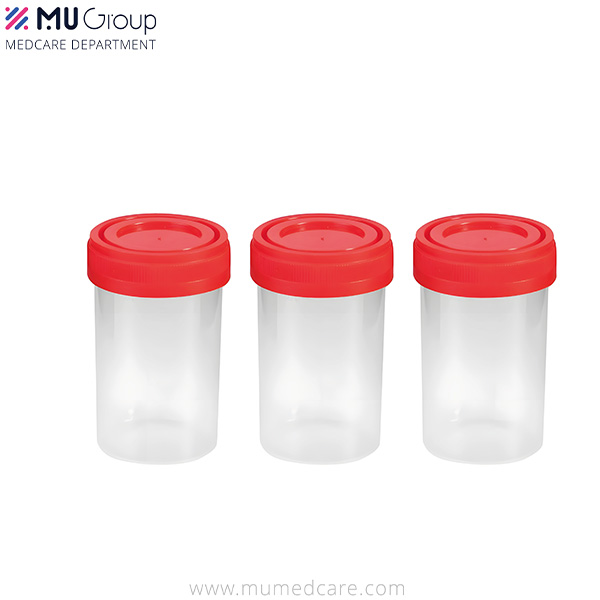
When evaluating a sputum specimen cup, you must scrutinize its physical attributes. The industry standard relies heavily on specific polymers. A medical PP specimen cup offers exceptional optical clarity. This allows lab technicians to perform quick visual inspections of sputum purulence. They can easily spot blood or mucus. Polypropylene is inherently shatter-resistant. It also offers excellent extreme temperature tolerance. This prevents dangerous cracking during deep cold storage.
Closure systems prevent disastrous leaks. You should always evaluate screw-cap designs against traditional snap-caps. Snap-caps frequently fail under minor pressure changes. Instead, choose robust dual-threaded lids. They provide secure, leak-proof transport. They maintain their seal across varying atmospheric pressures. They handle pneumatic tube forces easily.
Dimensional ergonomics matter deeply for patient compliance. We see a clear functional difference between wide-mouth and narrow-mouth containers. Many patients find sputum collection physically uncomfortable. They often experience severe coughing fits during the process. A wide opening, typically 50mm or larger, is a clinical necessity. It facilitates easy patient expectoration. It provides a larger target area for the patient. This prevents exterior cup fouling. Standard volume capacity usually ranges from 60ml to 120ml. You only need a tiny 5-10ml sample for comprehensive analysis. However, the larger size provides adequate safety headspace. It prevents bubbling and overspill during tight lid application. It keeps the exterior completely clean.
Visual calibration is essential for accurate daily tracking. Look for precise molded graduations. These help verify the exact fluid volume instantly. Frosted writing areas provide a smudge-proof surface. You can use standard markers for patient labeling. They prevent critical identity mix-ups in busy, high-volume laboratories.
The following chart illustrates why polypropylene dominates specimen collection manufacturing.
Physical Feature | Polypropylene (PP) | Polystyrene (PS) |
|---|---|---|
Impact and Shatter Resistance | High Reliability | Low Reliability |
Inherent Chemical Inertness | Excellent | Moderate |
Safe Temperature Range | -20°C to 121°C | 0°C to 70°C |
Optical Clarity Profile | High (Contact Clear) | Glass-like (Rigid) |
The physical design of your specimen collection container must support standard patient instructions. Clinicians usually ask for an early morning deep-cough collection. Patients struggle to aim viscous samples into tiny openings. A well-designed cup guides the sample cleanly into the bottom reservoir. This reduces patient anxiety. It also prevents messy exterior spills.
Temperature and storage windows are incredibly strict. Standard protocols require immediate processing whenever possible. If processing faces delays beyond two hours, you must refrigerate the sample. Keep it strictly between 2°C and 8°C. Your container must tolerate cold-chain transport without material embrittlement. Substandard plastics turn brittle. They crack under sustained refrigeration. This causes tragic sample loss.
Proper transport preparation prevents dangerous cross-contamination. Always follow strict secondary containment protocols. You should place the tightly sealed cup inside specialized biohazard bags. These bags need internal absorbent pads. Modern laboratories rely heavily on automated processing equipment. They use robotic handling systems to manage high volumes. Additionally, you must ensure exterior cup dimensions fit your standard transport racks perfectly. They must drop smoothly into automated centrifuge carriers. Mismatched sizing leads to severe workflow bottlenecks. It forces unnecessary manual handling by technicians. Manual handling increases the risk of accidental drops. It also slows down the entire testing pipeline significantly.
To prepare samples for safe transit, follow these structured steps:
Verify the dual-threaded lid is securely fastened to prevent initial microscopic leaks.
Place the sealed container upright into a secondary compliant biohazard bag.
Insert a highly absorbent pad into the bag to capture potential micro-spills.
Load the bag into dimensionally compatible transport racks to keep it completely stabilized.
Laboratory protocols dictate strict usage rules based on contamination risks. You must know when to mandate a sterile sample cup. Bacterial or fungal cultures require absolute sterility. Mycobacteriology testing, such as AFB testing for TB, also demands sterile environments. Any environmental bacteria can cause false-positive culture results. This triggers wrong treatments. Conversely, you can use clean, non-sterile containers for routine cytology. This targeted procurement approach optimizes your lab budget.
Evaluating your lab supplies for strict manufacturing standards is critical. Look for verified ISO 13485 certification. FDA registration or European CE marking also indicates reliable quality. Reputable manufacturers use automated, touch-free manufacturing lines. This minimizes human contamination before final packaging. Furthermore, they provide documented validation for their sterilization methods. They usually employ Ethylene Oxide (EO) gas or Gamma irradiation. Both methods guarantee deep sterility.
Lot traceability supports robust laboratory quality management systems (QMS). Bulk packaging must include clear, legible lot numbers. Expiration dates must remain visible on both the master case and individual plastic sleeves. This ensures you can track every cup back to its exact manufacturing run. If a systemic issue arises, you can execute a precise product recall quickly. Proper documentation protects your facility during regulatory compliance audits. It proves you maintain strict control over your diagnostic consumables.
Balancing unit cost against hidden expenses requires a strategic decision matrix. Cheap cups often look incredibly appealing on procurement spreadsheets. However, the hidden costs of sample rejection quickly destroy those perceived savings. You spend significantly more on skilled labor and re-collection logistics when cheap containers fail.
Evaluate supplier capacity for bulk fulfillment carefully. Consistent inventory availability prevents disastrous stockouts. You cannot afford shortages during severe flu seasons or sudden viral outbreaks. You need a partner possessing a highly robust global supply chain. They should hold buffer stock locally.
Before finalizing large contracts, conduct thorough sample testing. Treat this as a mandatory proof of concept. Request physical production samples from your shortlisted vendors. Run intensive water-leak tests. You should invert and aggressively shake water-filled cups. This simulates rough physical transit. Additionally, test compatibility with your current lab labeling systems. Ensure modern barcode adhesives stick firmly to the frosted plastic surface. Condensation often destroys weak labels.
Follow these best practices during your shortlisting phase:
Submerge the sealed cups in colored water to detect microscopic seal breaches quickly.
Subject the cups to a rapid freeze-thaw cycle to observe long-term material resilience.
Scan barcode labels after deep refrigeration to verify scannability under heavy condensation.
For your next steps, engage directly with the manufacturers. You must audit their detailed material data sheets (MDS). Ask targeted questions about their resin sourcing. Always request recent sterilization validation certificates before authorizing any bulk purchasing agreements. Strong supplier relationships ensure better pricing. They also guarantee priority fulfillment during global supply chain disruptions.
Selecting the optimal container is a critical operational decision. It deeply intersects patient compliance, diagnostic accuracy, and supply chain efficiency. A poorly designed cup jeopardizes test results. It frustrates clinical staff and compromises patient safety. Your testing pipeline depends entirely on these foundational tools.
We highly recommend you prioritize medical-grade polypropylene. Demand verified leak-proof closures for every clinical setting. Apply appropriate sterility standards to protect sample integrity while managing costs effectively. Never compromise on lid threading or material resilience.
Take immediate action to secure your testing pipeline. Audit your current container failure rates today. Discard inventory lacking proven dual-threaded seals. Finally, contact your procurement team to request comprehensive material data sheets from prospective vendors.
A: The ideal container capacity ranges from 60ml to 120ml. While most clinical testing only requires 5ml to 10ml of actual sputum, the larger container size is crucial. It prevents overfilling and accidental spillage during collection. The extra headspace also helps lab technicians open the lid safely without aerosolizing the biohazard contents.
A: Sputum intended for culture testing must be collected in a sterile environment to prevent environmental bacterial contamination. If non-sterile containers introduce outside microbes, the lab may report false-positive culture results. This leads to inaccurate diagnoses and incorrect antibiotic prescriptions. Absolute sterility ensures the lab only grows pathogens actually present in the patient's respiratory tract.
A: No. TB testing, specifically AFB (Acid-Fast Bacillus) cultures, requires specialized containers. These tests demand absolute sterility and highly durable, leak-proof designs. Standard clean cups often lack precision-threaded seals and may not meet the strict biohazard transport protocols required for handling highly infectious airborne pathogens like tuberculosis.
A: You should ideally process sputum samples within two hours of collection at room temperature. If delays occur, you can store the specimen for up to 24 hours if refrigerated at 2°C to 8°C. A medical-grade polypropylene cup is essential here, as its cold-resistance prevents the plastic from cracking during prolonged refrigeration.


