- Menu
-
- English


Views: 0 Author: Site Editor Publish Time: 2026-05-06 Origin: Site


Medical professionals constantly seek airway management solutions offering both speed and uncompromised safety. A supraglottic device stands as a vital bridge in modern anesthesia and emergency resuscitation. Among these options, the silicon laryngeal mask airway delivers unparalleled anatomical conformity.
Securing an open airway often presents clinical challenges, from unexpected anatomy to severe mucosal trauma risks. Relying solely on endotracheal intubation or basic face masks can unnecessarily complicate straightforward procedures. Facilities need reliable devices balancing patient safety against high-volume surgical demands.
This comprehensive guide evaluates the material science and physical mechanics behind silicone airway masks. We will explore their clinical efficacy compared to alternative materials and traditional intubation methods. Procurement teams and clinicians will discover clear, evidence-based parameters for evaluating, selecting, and safely implementing these critical devices.
Material advantage: 100% medical-grade silicone conforms better to perilaryngeal anatomy than PVC, reducing mucosal trauma and improving the low-pressure seal.
Procurement flexibility: Available in both single-use and Reusable Silicone Laryngeal Mask Airway formats, allowing facilities to balance cross-contamination risks with per-use cost efficiency.
Clinical safety: Efficacy relies heavily on proper inflation metrics (maintaining cuff pressure below 60 cm H2O) rather than over-inflation, which paradoxically breaks the seal.
Supplier vetting: A qualified silicon laryngeal mask airway manufacturer must provide strict validation for latex-free materials, ISO/CE/FDA compliance, and accurate color-coded sizing.
Understanding device mechanics helps clinical teams maximize patient safety during procedures. The device functions primarily on the concept of a low-pressure seal. Instead of passing directly through the vocal cords like an endotracheal tube, it rests smoothly over the laryngeal inlet. It acts as an intermediary bridge between a standard face mask and deeper endotracheal intubation. Clinicians deploy it to form a gentle, airtight barrier around the hypopharynx. This mechanism isolates the airway from the digestive tract without stimulating the vocal cords.
Material science plays a massive role in this sealing capability. We must look at how medical-grade silicone performs against standard polyvinyl chloride (PVC). Silicone remains the undisputed gold standard for airway management tools. It offers dramatically higher thermal stability and enhanced structural flexibility. As the device warms to body temperature, silicone softens. It conforms seamlessly to complex tissue curves within the throat. Some premium PVC models attempt to mimic this by applying a "satin texture" surface finish. However, genuine silicone consistently provides lower airway morbidity. Patients treated using pure silicone masks experience a significantly reduced incidence of postoperative sore throats and mucosal lesions.
Anatomical integration defines device effectiveness. The structure relies on three standard components working in unison. First, the mask features a distinct triangular shape explicitly mapped to the contours of the hypopharynx. Second, a 30-degree angled airway tube connects the mask to the ventilation circuit. This precise angle matches the natural curvature of the human oropharynx. Finally, an external pilot balloon allows clinicians to control and monitor cuff inflation levels accurately.
Feature | Medical-Grade Silicone | Standard PVC |
|---|---|---|
Thermal Stability | Excellent; softens safely at body temperature. | Moderate; remains relatively rigid. |
Tissue Conformity | High; adapts well to laryngeal anatomy. | Low to Moderate; relies on surface textures. |
Mucosal Trauma Risk | Very Low; minimizes postoperative sore throat. | Higher; rigid edges may cause friction. |
Flexibility | Superior; resists kinking during positioning. | Adequate; prone to folding under pressure. |
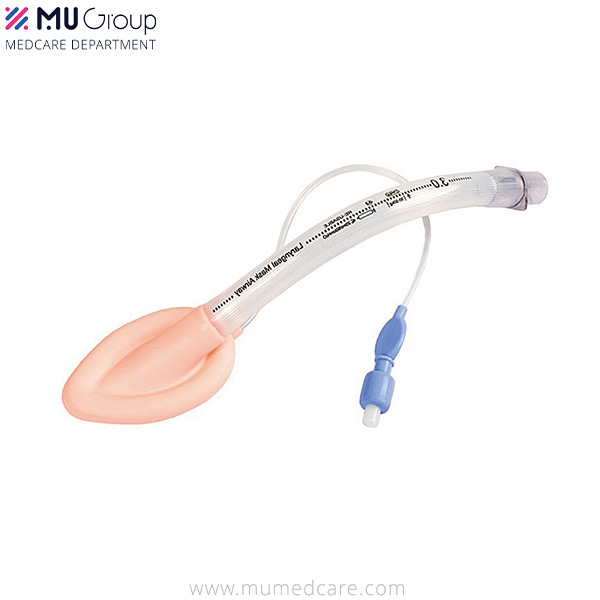
Healthcare facilities constantly evaluate inventory models based on clinical volume and processing capabilities. You essentially have two dominant procurement pathways: single-use disposable models or reusable systems. Each pathway offers distinct operational advantages.
Single-use models eliminate cross-contamination risks entirely. Because staff discard them immediately after surgery, facilities avoid complex sterilization processing routines. This factor makes disposable models incredibly ideal for high-volume outpatient surgical centers. When rapid operating room turnaround time dictates daily success, opening a fresh, pre-lubricated device streamlines workflow immensely. Clinicians never worry about compromised cuff integrity from previous chemical exposures.
Conversely, a Reusable Silicone Laryngeal Mask Airway offers profound viability for hospitals with robust central sterile processing departments. Manufacturers typically validate these heavy-duty devices for a maximum of 40 autoclave sterilization cycles. Choosing reusable devices dramatically reduces medical waste generation. They fit perfectly into sustainability initiatives without sacrificing clinical reliability.
However, managing reusable inventories requires strict protocols. Staff must perform rigorous post-sterilization inspections before approving a device for its next patient. You should implement a mandatory quality check routine.
Cycle Tracking: Log the specific serial number to ensure it has not exceeded the 40-cycle limit.
Visual Discoloration Check: Examine the tube for any yellowing or cloudiness indicating material breakdown.
Cuff Integrity Test: Inflate the cuff to 50% capacity and submerge it in sterile water to check for micro-leaks.
Connector Fit Assessment: Verify the 15mm standard connector remains perfectly round and securely attached.
Medical technology continuously evolves to address highly specific surgical scenarios. Clinicians categorize these airway devices into generational tiers and specialty configurations. Recognizing these distinctions ensures you deploy the right tool for the right patient.
We generally divide standard products into First-Generation and Second-Generation models. First-Generation devices provide a standard oral airway seal. They are highly suitable for routine elective anesthesia cases involving fasting, low-reflux-risk patients. These workhorses manage standard spontaneous ventilation flawlessly.
Second-Generation devices introduce advanced gastric access. They feature a built-in gastric drain tube running parallel to the main airway. This crucial channel allows providers to suction gastric secretions directly, actively reducing aspiration risks. Second-Generation models remain essential for laparoscopic surgeries. During these procedures, pneumoperitoneum creates marginally higher abdominal pressures, increasing reflux probability. The gastric channel acts as an active safety release valve.
Beyond generational differences, manufacturers engineer specialty silicone configurations for complex clinical environments.
Wire-Reinforced (Flexible) Models: These contain internal wire coiling embedded inside the silicone tube. The wire prevents dangerous kinking. They are ideal for head, neck, and ENT surgeries where surgeons must forcefully direct the tube away from the immediate surgical field.
MRI-Compatible Models: Diagnostic imaging environments pose severe magnetic risks. MRI-compatible devices remove all metal components, including standard inflation valve springs. Clinicians can safely ventilate patients inside active scanner rooms.
Intubating Models: Sometimes airway placement fails. Intubating models feature specialized anatomical curves and rigid handles. They facilitate blind endotracheal intubation through the mask itself. Clinicians deploy them rapidly during terrifying "cannot intubate, cannot ventilate" (CICV) emergencies.
Achieving a safe, reliable airway requires flawless technique. Simply having a premium silicone device does not guarantee success. Providers must adhere strictly to established insertion best practices.
Begin by positioning the patient correctly. The patient must be placed in the standard "Sniffing position." This means the neck flexed forward and the head extended back. This alignment naturally opens the hypopharyngeal space. Prior to insertion, verify the cuff is fully deflated and completely unwrinkled. Apply a water-soluble lubricant only to the posterior surface of the mask. Lubricating the anterior face risks obstructing the vital airway aperture.
Inflation protocols represent the highest area of clinical error. We must dispel the over-inflation fallacy. Clinicians often assume more air creates a tighter seal. Reality proves the exact opposite. Silicone models achieve the absolute best perilaryngeal seal in a slightly "under-inflated" state. Pumping excess air forces the device away from the mucosal tissues.
You must maintain target cuff pressure strictly between 40 and 60 cm H2O. Exceeding this threshold dramatically increases the risk of severe nerve damage, postoperative dysphagia, and actual gas leakage. During mechanical ventilation, respiratory therapists must limit Peak Inspiratory Pressure (PIP) to 15 cm H2O. Pushing PIP higher forces air past the lower esophageal sphincter, resulting in dangerous gastric insufflation.
Finally, respect the clinical contraindications. Emergency physicians universally use the RODS Framework to identify patients unsuitable for supraglottic airways.
Letter | Clinical Condition | Risk Rationale |
|---|---|---|
R | Restricted mouth opening | Physical inability to pass the device safely past the teeth. |
O | Airway Obstruction | Tumors or severe swelling block the passage below the glottis. |
D | Distorted anatomy | Previous radiation or trauma prevents the cuff from sealing properly. |
S | Stiff lungs / cervical spine | Low pulmonary compliance requires ventilation pressures exceeding device limits. |
Choosing the right supply partner impacts patient safety just as heavily as clinical technique. Procurement teams must look beyond pricing brochures. You should evaluate vendors against rigid manufacturing standards.
Quality assurance and formal certifications form your baseline requirement. Any prospective silicon laryngeal mask airway manufacturer must demonstrate clear regulatory compliance. Demand proof of FDA 510(k) clearance, CE marking, and strict adherence to ISO 13485 quality management systems. These documents verify the facility follows rigorous international production standards.
Material transparency is equally critical. You must demand documentation proving their production lines are 100% latex-free and DEHP-free. Introducing latex into an airway causes catastrophic anaphylactic reactions in sensitive patients. DEHP, a common plasticizer, poses long-term toxicity risks. Ensuring clean materials mitigates massive liability.
Evaluate the manufacturer based on intuitive usability features. Do they incorporate thoughtful design elements protecting clinicians? Look for color-coded pilot balloons. A rapid visual color system helps nurses instantly identify the correct size during high-stress codes. Sizes typically range from 1.0 for tiny neonates up to 6.0 for large adult males. Integrated cuff pressure indicators also showcase a manufacturer's dedication to safety, allowing teams to monitor the 40-60 cm H2O safety zone visually.
Lastly, assess supply chain reliability. Request batch testing data to confirm they maintain consistent lot-to-lot silicone density. If a brand feels soft one month and rigidly uncomfortable the next, your clinical team will lose trust. Ensure they guarantee reliable delivery timelines for bulk procurement, preventing dangerous inventory stockouts.
Transitioning toward standardized silicone airway management tools directly impacts procedural efficiency and patient recovery. Genuine medical-grade silicone delivers superior anatomical seals, substantially lowering mucosal injury risks compared to older PVC alternatives. Understanding precise insertion techniques and pressure limits ensures these devices perform flawlessly during critical interventions.
Procurement teams should carefully balance their facility's internal sterilization capabilities against the operational ease of single-use models. Establishing a clear inventory strategy prevents workflow bottlenecks and budget overruns.
Clinical leads and purchasing directors should take immediate action. Request physical samples and detailed specification sheets from vetted manufacturers. Conduct internal sizing tests and pressure-seal evaluations to guarantee the chosen devices meet your department's exact demands.
A: Most manufacturers cap safe usage at 40 sterilization cycles. However, you must perform a strict visual inspection for tube discoloration and cuff integrity before every single use to ensure patient safety.
A: Yes. They work exceptionally well when utilizing Pressure Support Ventilation (PSV) or Pressure Control Ventilation (PCV). You must ensure peak airway pressures remain firmly at or below 15 cm H2O to prevent gastric insufflation.
A: Perform the "up-down maneuver." Withdraw the device 5 to 6 centimeters without deflating the cuff. Then, gently advance it again. This motion helps unroll a potentially folded epiglottis blocking the aperture.


