- Menu
-
- English


Views: 0 Author: Site Editor Publish Time: 2026-05-02 Origin: Site


In both routine elective surgery and unpredictable difficult airway scenarios, the supraglottic airway device has become a standard of care. Clinicians rely on it daily for rapid, life-saving ventilation. While the foundational design of the LMA remains consistent, the choice of material—specifically medical-grade silicone—drastically impacts patient safety, mucosal trauma, and procurement return on investment. Rigid materials often cause postoperative complications. Conversely, softer silicone compounds adapt easily to complex patient anatomy. For clinical directors and medical procurement teams at the decision stage, understanding the precise applications of a silicon laryngeal mask airway, alongside the commercial choice between disposable and reusable variants, is critical for standardizing airway management protocols. You must balance optimal clinical outcomes against strict sterile processing standards. This guide will provide actionable insights to optimize your respiratory equipment strategy.
Clinical Role: Primarily used as a bridge to intubation, an alternative to face masks in short fasting-patient surgeries, and a rescue device in "Cannot Intubate, Cannot Oxygenate" (CICO) scenarios.
Material Superiority: 100% medical-grade silicone offers superior biocompatibility, softer oropharyngeal conformity, and a lower incidence of postoperative sore throat compared to rigid PVC.
Cost vs. Compliance: A Reusable Silicone Laryngeal Mask Airway lowers long-term cost-per-use (typically rated for up to 40 autoclave cycles), while single-use variants eliminate cross-contamination risks (e.g., prion diseases).
Vendor Evaluation: Selecting a silicon laryngeal mask airway manufacturer requires validating FDA/CE certifications, ISO compliance, and the availability of 2nd-generation features (e.g., gastric access channels).
Modern anesthesia relies heavily on supraglottic devices. They offer a less invasive approach than traditional endotracheal intubation (ETT). Clinicians deploy them across a variety of settings, ranging from controlled operating rooms to chaotic emergency scenes.
In short-to-medium elective procedures, the silicone LMA acts as a highly effective alternative to endotracheal intubation. It bypasses the vocal cords entirely. This reduces the overall Work of Breathing (WOB) for the patient. Furthermore, clinicians require minimal to no muscle relaxants during insertion. Skipping muscle relaxants promotes faster emergence from anesthesia. It also accelerates patient recovery times in ambulatory surgical centers.
The device serves as a primary rescue tool in the ASA (American Society of Anesthesiologists) Difficult Airway Algorithm. When a clinician faces a "Cannot Intubate, Cannot Oxygenate" scenario, securing an airway becomes a race against time. Medical professionals evaluate patients using the RODS framework to predict supraglottic placement success. The RODS mnemonic stands for:
Restriction: Assesses any resistance in the airway or limited mouth opening.
Obstruction/Obesity: Identifies blockages or anatomical challenges posed by excess tissue.
Disrupted anatomy: Looks for distortion caused by trauma, tumors, or previous surgeries.
Short thyromental distance: Evaluates the space between the thyroid cartilage and the chin.
Emergency responders face immense pressure during out-of-hospital cardiac arrests. Intubation expertise may be unavailable in the field. Here, the silicone LMA shines due to its highly successful blind-insertion rate. Depending on the exact model, success rates often exceed 80% to 90% on the first attempt. First responders can secure the airway quickly without a laryngoscope.
Inserting a laryngoscope blade often triggers a massive sympathetic stress response. Heart rates spike, and blood pressure rises. The silicone LMA provides superior hemodynamic stability upon insertion and emergence. It simply glides into the hypopharynx. This physiological advantage proves crucial for patients with severe cardiovascular disease.
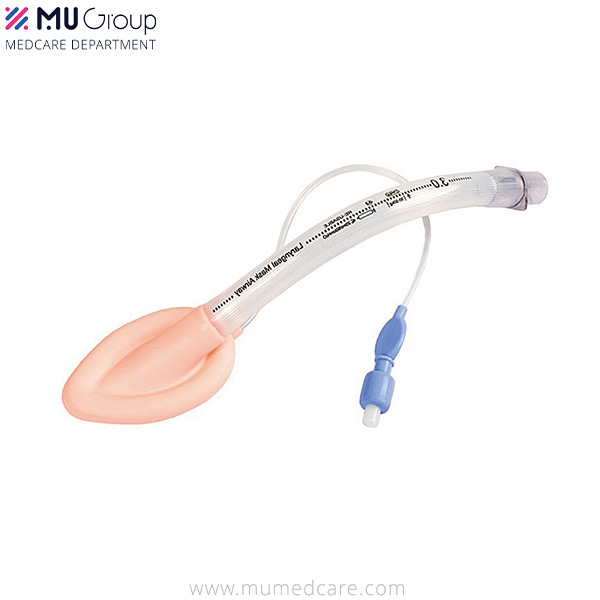
Airway devices must remain inside the patient for extended periods. Therefore, material composition directly dictates patient safety. Medical-grade silicone dominates the premium market for several evidence-based reasons.
Premium silicone devices are inherently Latex-free and DEHP-free. Avoiding these chemicals minimizes the risk of severe allergic reactions. It also eliminates long-term toxicity risks associated with plasticizers leaching into the body. You can safely deploy these devices across diverse patient demographics, including sensitive pediatric populations.
Silicone feels significantly softer and more pliable than standard PVC. This pliability allows the inflatable cuff to form a low-pressure seal against the glottic opening. Rigid PVC cuffs often create localized high-pressure zones. These pressure points cause mucosal ischemia. By utilizing soft silicone, clinicians minimize postoperative complications like sore throat, dysphagia, or nerve palsy.
Clinical environments experience wide temperature fluctuations. Ambulances get freezing cold; operating rooms remain heavily air-conditioned. Unlike PVC, silicone maintains its structural integrity and flexibility across a wide range of temperatures. It does not become brittle in the cold. It ensures reliable performance no matter where you initiate airway management.
To help procurement teams visualize these differences, review the comparative baseline below.
Feature Focus | Medical-Grade Silicone | Standard PVC |
|---|---|---|
Flexibility | Highly pliable, conforms to anatomy | Rigid, requires warming to soften |
Mucosal Trauma Risk | Low (forms a low-pressure seal) | Moderate to High (can cause ischemia) |
Allergen Profile | Latex-free, DEHP-free | May contain plasticizers (DEHP) |
Temperature Reaction | Stable across extreme ranges | Becomes stiff in cold environments |
Hospitals must decide between sterilizable equipment and single-use items. This choice directly impacts facility budgets and infection control protocols. You must weigh upfront expenses against downstream processing burdens.
Many high-volume surgical centers prefer a Reusable Silicone Laryngeal Mask Airway. Manufacturers typically validate these premium devices for up to 40 steam autoclave sterilization cycles. This longevity drastically reduces the per-procedure cost over time. It offers an exceptional return on investment for busy anesthesia departments.
However, reusables demand rigorous infrastructure. Facilities require robust CSSD (Central Sterile Services Department) protocols. Technicians must track usage limits meticulously. They must inspect the cuff for micro-tears, discoloration, or general degradation before every single use. A failed cuff mid-surgery poses a massive clinical risk.
Conversely, single-use silicone LMAs prioritize ultimate patient safety. They completely eliminate the risk of cross-contamination. This benefit becomes particularly relevant when handling resilient pathogens or prion diseases, which survive standard autoclaving.
Disposables also boost operational efficiency. They remove the entire sterile processing burden from the hospital staff. Vendors often supply these devices in pre-packaged kits. A typical kit contains the sterile airway, an inflation syringe, and a packet of water-soluble lubricant. Clinicians simply open the package and deploy the airway immediately.
Conduct a facility audit to determine your CSSD bandwidth before committing to reusables.
Stock a reserve of single-use kits in emergency crash carts for immediate deployment.
Maintain a detailed tracking log if you utilize sterilizable models to prevent over-cycling.
Manufacturers continuously iterate on the original design. Today, distinct configurations exist to tackle specific surgical challenges. Choosing the correct subtype prevents perioperative complications.
First-generation LMAs provided a simple airway seal. Second-generation models introduced an integrated gastric drainage tube. This extra channel physically separates the respiratory and alimentary tracts. It proves crucial for mitigating the inherent regurgitation risk of LMAs. Clinical literature reports this regurgitation risk fluctuates between 0% and 23%. By sliding an orogastric tube down the channel, clinicians can suction stomach contents safely away from the lungs.
Sometimes an LMA serves only as a temporary conduit. Intubating LMAs feature rigid anatomical curves and specialized epiglottic elevating bars. These design tweaks facilitate blind endotracheal intubation through the LMA itself. They feature specific internal diameters. For example, sizes 3 and 4 accommodate up to a 6.0 ETT. Sizes 5 and 6 accommodate up to a 7.0 ETT. They act as a reliable guide wire system for the breathing tube.
Certain surgeries occur directly in the airway path. Wire-reinforced models feature silicone tubes embedded with a tough spiral wire. This wire prevents the tube from kinking or collapsing. They are essential for ENT, dental, and maxillofacial surgeries. The anesthesiologist can bend the airway tube sharply away from the surgical field. The underlying glottic seal remains unbroken, giving surgeons a clear, unhindered view.
Not all medical device vendors maintain the same quality control. You must vet potential partners rigorously. A weak cuff or a blocked tube can lead to disastrous patient outcomes.
Never compromise on legal certifications. You should shortlist only manufacturers holding verifiable CE marking and FDA 510(k) clearance. Furthermore, check for ISO 13485 certification. This specific ISO standard proves the vendor maintains a comprehensive quality management system dedicated to medical devices.
A superior device actively prevents user error. Look for intelligent design features embedded into the product. Key clinical safeguards include:
Color-coded pilot balloons: These allow rapid size identification during chaotic emergencies.
Absence of aperture bars: Models intended to act as intubation conduits must lack these bars, as they block endotracheal tubes.
Advanced cuff pressure indicators: These visual tools help clinicians maintain the optimal 40-60 cm H2O "green zone". Keeping pressure in this zone prevents severe mucosal damage.
Hospital supply chains demand reliability. A reputable silicon laryngeal mask airway manufacturer should offer a complete matrix of sizes. They must supply everything from neonate (size 1) to large adult (size 6) variants. Additionally, they should manufacture both 1st and 2nd generation configurations. Partnering with a single-source vendor simplifies inventory management and ensures consistent product quality across all departments.
The silicone LMA stands as an indispensable tool in modern anesthesia and emergency airway management. It offers distinct, measurable advantages in tissue safety, hemodynamics, and ease of rapid insertion. By moving away from rigid plastics, clinical teams significantly reduce postoperative throat complications.
Procurement choices must always balance clinical efficacy against budget realities. You must weigh the long-term cost-efficiency of sterilizable models against the strict infection-control benefits of disposable kits. Neither option is universally perfect; the choice depends entirely on your facility's operational capabilities.
Next Steps:
Evaluate your facility's unique case mix, paying special attention to routine ambulatory cases versus high-risk ENT procedures.
Assess your current CSSD capabilities to see if they can handle the strict tracking required for reusables.
Request physical clinical samples from validated, ISO-certified manufacturers to conduct hands-on staff evaluations before signing bulk contracts.
A: Volumes depend strictly on size and patient weight. Generally, a Size 3 (30-50 kg) requires ~20 mL; Size 4 (50-70 kg) requires ~30 mL; and Size 5 (70+ kg) requires ~40 mL of air. Over-inflation increases leak rates and mucosal injury.
A: Standard positive pressure ventilation via LMA should typically not exceed peak airway pressures of 20 cm H2O. Pressures exceeding this threshold significantly increase the risk of gastric insufflation and subsequent aspiration.
A: Most industry-standard reusable silicone LMAs are FDA-cleared and CE-marked for a maximum of 40 autoclave sterilization cycles. Manufacturers require strict logging and pre-use visual/inflation checks to ensure structural integrity.
A: Correct placement is indicated by 5 key checks: a distinct resistance (endpoint) during blind insertion, a slight outward movement of the tube upon cuff inflation, a mild bulge in the anterior neck, a midline black orientation line, and the cuff not being visible in the oral cavity.


