- Menu
-
- English


Views: 0 Author: Site Editor Publish Time: 2026-08-04 Origin: Site


Effective cardiopulmonary care relies on a precise intersection of specialized clinical expertise and highly reliable medical equipment. Healthcare facilities, clinical directors, and procurement teams face the dual challenge of standardizing respiratory care protocols while evaluating and sourcing cost-effective, compliant medical supplies that directly impact patient outcomes. Moving beyond basic definitions, this guide breaks down the clinical mechanics of respiratory therapy, categorizes essential treatment modalities, and provides an evidence-based framework for evaluating and procuring the necessary respiratory equipment.
Respiratory therapy is a specialized allied health field encompassing the assessment, diagnosis, and treatment of acute and chronic cardiopulmonary conditions, requiring standardized clinical protocols.
Successful patient outcomes in lung expansion and airway management depend heavily on the quality and reliability of specific medical supplies, such as spirometers and anesthesia interfaces.
Procurement decisions must balance upfront costs with clinical efficacy, infection control standards (reusable vs. disposable), and patient compliance rates.
Sourcing strategies, including wholesale purchasing of high-volume items, are critical for maintaining operational scalability without compromising care quality.
Respiratory therapy functions as a primary allied health discipline focused on diagnosing and managing a broad spectrum of cardiopulmonary health issues. Clinical teams routinely address conditions including asthma, COPD, cystic fibrosis, lung cancer, pneumonia, sleep apnea, and severe lung trauma. The baseline requirement for effective treatment involves continuous monitoring and rapid intervention using specialized equipment. Practitioners must understand the mechanical properties of the lungs, airway resistance, and gas exchange principles to apply the correct therapeutic interventions at the bedside.
The hands-on scope of practice for a respiratory therapist extends far beyond basic oxygen administration. Practitioners manage life-support equipment, place arterial catheters, and execute complex treatment plans. They integrate seamlessly with intensive care, emergency, sleep lab, and outpatient teams to ensure continuity of care across all patient recovery phases. When a patient codes or requires immediate intubation, the respiratory therapist secures the airway, sets up the mechanical ventilator, and adjusts parameters based on real-time blood gas analysis.
Establishing measurable patient outcomes remains the primary success criteria for clinical programs. Facilities track metrics such as reduced intubation times, improved oxygen saturation, successful weaning from mechanical ventilation, and lower hospital readmission rates. Achieving these benchmarks requires a combination of clinical skill and dependable respiratory therapy equipment. Without high-quality interfaces and accurate diagnostic tools, even the most experienced clinicians cannot optimize patient ventilation.
Clinical Metric | Measurement Method | Target Outcome | Equipment Utilized |
|---|---|---|---|
Oxygen Saturation (SpO2) | Continuous Pulse Oximetry | > 92% on room air or prescribed FiO2 | Pulse Oximeter, Oxygen Delivery Masks |
Arterial Blood Gas (ABG) | Arterial Puncture / Line Draw | pH 7.35-7.45, PaCO2 35-45 mmHg | ABG Kits, Arterial Catheters |
Lung Volume Expansion | Incentive Spirometry | Achieve pre-operative baseline volume | Volume or Flow-Oriented Spirometers |
Ventilator Weaning | Spontaneous Breathing Trials (SBT) | Extubation within 48-72 hours post-op | Mechanical Ventilators, Weaning Protocols |
The clinical approach to maintaining patent airways ranges from non-invasive positive pressure ventilation (NIPPV) to complex mechanical ventilation. Therapists adjust pressure settings, monitor tidal volumes, and ensure the airway remains clear of obstructions. This mechanism of action directly supports patients who cannot maintain adequate respiration independently. NIPPV modalities like CPAP and BiPAP provide splinting pressure to keep alveoli open, preventing collapse during exhalation and improving functional residual capacity.
Clinical objectives focus on ensuring adequate alveolar ventilation and oxygenation while minimizing ventilator-associated complications and barotrauma. Precise control over ventilation parameters prevents lung injury and accelerates the patient's transition back to spontaneous breathing. Clinicians must constantly evaluate peak inspiratory pressures, plateau pressures, and positive end-expiratory pressure (PEEP) to avoid overdistending fragile lung tissue.
Assess the patient's spontaneous breathing effort and airway patency.
Select the appropriate interface, ensuring a tight seal without causing tissue breakdown.
Initiate ventilation at baseline settings based on ideal body weight and pathology.
Titrate FiO2 and PEEP based on continuous pulse oximetry and intermittent ABG results.
Monitor for patient-ventilator asynchrony and adjust trigger sensitivity accordingly.
Techniques used to prevent or treat atelectasis and mobilize pulmonary secretions are standard practice, particularly in post-operative or cystic fibrosis patients. Therapists employ targeted breathing exercises and mechanical hyperinflation to clear airways and expand collapsed lung segments. This proactive approach prevents secondary infections like pneumonia. Chest physiotherapy, postural drainage, and high-frequency chest wall oscillation are frequently deployed alongside pharmacological interventions like mucolytics and bronchodilators.
Improving pulmonary function during prolonged bed rest or recovery stands as the primary clinical objective. By actively engaging the patient in their respiratory recovery, facilities can significantly reduce the length of stay and improve overall respiratory mechanics. When patients remain immobile, secretions pool in the dependent regions of the lungs, creating an ideal environment for bacterial colonization. Aggressive secretion clearance protocols disrupt this cycle.
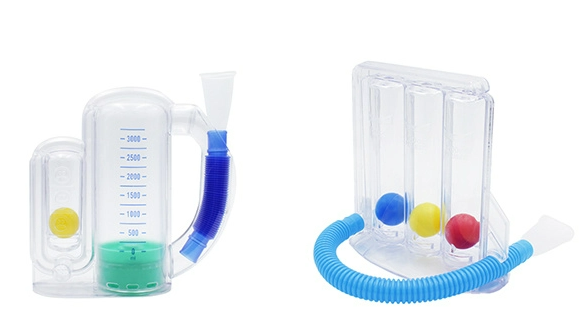
Visual feedback mechanisms in spirometry drive patient adherence to deep breathing protocols post-operation. When patients can see their progress, they are more likely to complete their prescribed breathing exercises. This active participation prevents postoperative pulmonary complications. The device requires the patient to take a slow, sustained maximal inspiration, which decreases pleural pressure, promotes increased lung expansion, and facilitates better gas exchange.
Comparing digital spirometers against mechanical volume-oriented devices reveals distinct operational differences. While digital models offer data tracking, mechanical devices remain the standard for reliability and ease of use in general ward settings. The clinical and financial rationale for sourcing a 3-ball incentive spirometer centers on its proven effectiveness and low per-unit cost. These flow-oriented devices provide immediate visual confirmation of inspiratory effort, making it easy for nursing staff to verify patient compliance during rounds.
Evaluating the cost-efficiency of purchasing a Wholesale Three Balls Incentive Spirometer Medical Breathing Exerciser helps maintain adequate stock levels across large hospital networks. High-volume purchasing ensures that every post-operative patient receives a device without straining departmental budgets. Consistent availability of these devices prevents delays in initiating lung expansion therapy, which is highly time-sensitive in the immediate post-operative window.
Assessing the seal integrity, dead space volume, and patient comfort of various delivery masks directly impacts treatment efficacy. A poor seal leads to oxygen leakage and compromised ventilation, while excessive dead space can cause carbon dioxide rebreathing. Proper mask selection is a fundamental component of effective respiratory care. Clinicians must match the interface to the specific therapy, whether it is a simple oxygen mask for low-flow delivery or a tightly sealed non-vented mask for non-invasive ventilation.
The conceptual trade-offs between single-use disposable masks and a reusable anesthesia mask require careful consideration. Analyzing the sterilization requirements, durability, and long-term return on investment of reusable silicone or polycarbonate masks versus the logistical simplicity of disposables helps facilities optimize their procurement strategy. Reusable masks often provide a superior anatomical fit due to higher-quality materials, which is critical during manual resuscitation or induction of anesthesia.
Evaluate the anatomical contouring of the mask cushion to ensure it accommodates various facial structures.
Verify the material compatibility with hospital autoclave and high-level disinfection protocols.
Assess the transparency of the mask dome to allow clinicians to monitor for emesis or secretions.
Check the sizing options available to ensure coverage for neonatal, pediatric, and adult populations.
Pulse oximetry, capnography, and arterial blood gas kits provide real-time data for clinical adjustments. These tools allow therapists to monitor oxygen saturation, carbon dioxide levels, and acid-base balance continuously. Accurate diagnostics are the foundation of responsive respiratory care. Capnography, in particular, provides breath-to-breath analysis of exhaled CO2, offering immediate feedback on ventilation status and the effectiveness of chest compressions during cardiac arrest.
Respiratory therapists utilize these tools in tandem with placing arterial lines and catheters to continuously monitor cardiopulmonary distress. Ensuring compatibility between consumable diagnostic supplies and existing hospital monitoring infrastructure prevents data silos and streamlines patient care workflows. Standardizing cables, sensors, and sampling lines across the facility reduces the risk of equipment mismatch during critical patient transports between the emergency department and the intensive care unit.
Assessing the overall value of respiratory medical supplies requires factoring in sterilization costs, replacement frequency, and clinical efficacy. Facilities must look beyond the initial purchase price to understand the true financial impact of their equipment choices. Ensuring all sourced equipment meets FDA, ISO, or CE certifications for respiratory devices guarantees baseline safety and performance. Procurement teams should collaborate closely with clinical directors to trial equipment before committing to large-scale contracts.
When evaluating reusable items, the calculation must include the labor hours required for central sterile processing, the cost of chemical disinfectants, and the expected lifecycle of the product before material degradation occurs. Conversely, disposable items require analysis of waste management costs and supply chain storage capacity. A hybrid approach often yields the best results, utilizing reusable interfaces for short-term, high-acuity procedures and disposables for long-term ward use.
Criteria for selecting medical supply distributors should focus on lead times, minimum order quantities, and quality assurance processes. Reliable vendors prevent critical shortages during peak demand periods. Strategies for preventing stockouts of high-turnover items like spirometers and oxygen tubing are essential for maintaining uninterrupted patient care during respiratory illness seasons. Establishing par levels based on historical usage data helps automate the reordering process and prevents emergency expedited shipping fees.
Facilities should audit their primary suppliers annually to verify compliance with quality management systems. Requesting documentation on defect rates and backorder history provides insight into the vendor's operational stability. Diversifying the supply chain by qualifying secondary vendors for critical respiratory consumables protects the facility against regional manufacturing disruptions or logistics bottlenecks.
The introduction of new respiratory devices can lead to improper patient instruction or clinical errors if staff are not adequately prepared. Even simple devices require clear operational guidelines. Developing standardized in-service training modules and competency checklists for respiratory therapists and nursing staff prior to rollout mitigates this risk effectively. Hands-on demonstrations during shift huddles ensure that all end-users understand the specific nuances of the new equipment.
Clinical educators should focus on the most common failure points, such as incorrect assembly of nebulizer circuits or improper sizing of non-invasive ventilation masks. Providing quick-reference guides at the bedside reinforces the training and gives staff immediate access to troubleshooting steps. Tracking incident reports in the weeks following a new equipment launch helps identify areas where additional education is required.
Cross-contamination associated with improperly sterilized reusable equipment presents a significant clinical risk. Implementing strict, audited adherence to manufacturer instructions for use regarding high-level disinfection and autoclave procedures ensures patient safety and extends the lifespan of reusable devices. Infection control teams must review and approve all reprocessing workflows before any new reusable respiratory equipment is introduced into clinical circulation.
Regular audits of the central sterile processing department verify that technicians are following the correct dwell times for chemical disinfectants and achieving the appropriate temperatures during steam sterilization. Any deviation from the validated instructions for use can result in biofilm formation on respiratory equipment, leading to healthcare-associated infections. Clear segregation of clean and dirty equipment during transport is also mandatory to maintain the integrity of the sterilization process.
Audit current respiratory equipment inventory to identify gaps in supply, expired consumables, or outdated technology that hinders clinical efficiency.
Evaluate the clinical and financial impact of transitioning to specific reusable or wholesale disposable models based on your facility's patient volume and sterilization capacity.
Request physical samples and technical specifications from verified medical supply distributors to conduct hands-on clinical trials before finalizing large procurement orders.
Develop and deploy standardized competency checklists for all respiratory staff to ensure proper utilization and infection control compliance for newly sourced equipment.
A: The primary goal is to assess, diagnose, and treat cardiopulmonary disorders to restore optimal breathing function, utilizing both clinical interventions and specialized medical equipment.
A: Respiratory therapists manage a wide range of conditions, including asthma, chronic obstructive pulmonary disease (COPD), cystic fibrosis, lung cancer, pneumonia, sleep apnea, and severe lung trauma.
A: It is a mechanical device that provides visual feedback via three rising balls to encourage patients to take slow, deep breaths, helping to expand the lungs and prevent complications like atelectasis after surgery.
A: Reusable masks, typically made of durable, autoclavable materials like silicone, offer a superior anatomical seal, reduce long-term medical waste, and provide reliable performance for facilities with robust sterilization protocols.
A: Facilities should evaluate wholesale purchases based on regulatory compliance (FDA/ISO), historical defect rates, supply chain reliability, and the specific clinical requirements of their respiratory therapy department.
A: Lung expansion therapy requires spontaneous patient effort to increase lung volume, whereas mechanical ventilation provides partial or full machine-driven breathing support for patients unable to maintain adequate airways independently.
A: Success is measured using objective data such as arterial blood gas (ABG) results, improved oxygen saturation levels, increased lung volume capacity, and the successful weaning of patients from mechanical ventilation.


