- Menu
-
- English


Views: 0 Author: Site Editor Publish Time: 2026-10-07 Origin: Site


Up to 50% of aerosolized medication vanishes into the surrounding environment when a mask fits poorly. This massive loss directly impacts patient outcomes and prolongs recovery times in acute care settings. Medical suppliers and procurement teams face a significant operational challenge here. Stocking a generic, one-size-fits-all inventory drives high return rates from hospitals. It causes severe clinical dissatisfaction among respiratory therapists who struggle to treat patients effectively. Ultimately, poor equipment selection compromises contract renewals with major healthcare facilities. We need a systematic framework to solve this issue. Evaluating, sizing, and sourcing a Nebulizer Mask requires balancing clinical efficacy with procurement scalability. You must ensure absolute seal integrity while minimizing mechanical dead space. This guide provides the exact technical parameters required to build a reliable, high-performing respiratory inventory that meets strict clinical demands.
Aerosol delivery efficiency relies strictly on anatomical fit; suppliers must stock a stratified range of sizes and ergonomic shapes rather than relying on universal models.
The criteria for respiratory therapy mask selection differ significantly from standard oxygen delivery, requiring specific evaluation of exhalation ports and dead space volume.
Procuring a comprehensive child and adult nebulizer kit requires verifying universal connector compatibility across compressor, mesh, and ultrasonic devices.
Balancing single-patient-use (disposable) versus reusable masks involves distinct trade-offs in unit cost, material compliance (e.g., phthalate-free PVC vs. medical-grade silicone), and inventory management.
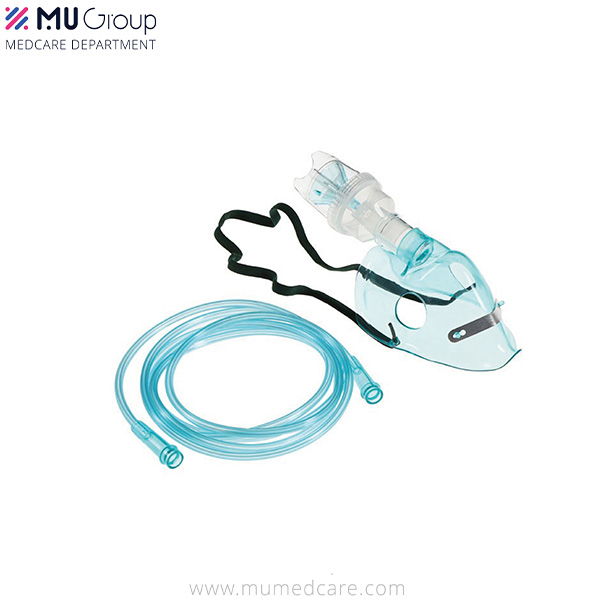
Defining a successful mask fit requires looking at both clinical and supplier metrics. Clinically, success means maximum medication delivery to the lungs. From a supplier perspective, success means a low defect rate and zero returns. Achieving both requires strict attention to dimensional accuracy.
We measure success in the field through specific indicators:
Consistent medication delivery times without prolonged therapy sessions.
Zero visible mist escaping near the patient's eyes during exhalation.
High patient tolerance scores recorded by nursing staff.
Predictable reorder volumes from the facility procurement department.
Aerosol dispersion mechanics demand a tight, anatomical seal. Gaps around the nasal bridge or chin drastically reduce the respirable dose. When a seal fails, the medication mist escapes before the patient can inhale it. This leakage wastes expensive pharmaceuticals and delays patient recovery.
Industry baselines strictly cap acceptable leakage rates in targeted respiratory therapies. A high-quality mask directs the aerosol plume straight into the oral and nasal pathways. Poorly sealed edges allow the mist to drift upward into the eyes. This causes ocular irritation and reduces the actual dosage delivered to the pulmonary system. Procurement teams must prioritize masks with pliable, contoured flanges that adapt to facial curves. We often see rigid masks fail leak tests during standard hospital audits.
Mask discomfort actively drives therapy rejection. Rigid plastic edges and tight elastic straps frustrate patients quickly. This rejection happens most frequently in pediatric populations. Children will fight treatments if the equipment causes pain or anxiety. A crying, distressed child breathes shallowly and erratically.
A calm child absorbs significantly more aerosolized mist. Masks that cause distress actively degrade treatment efficacy. Patient compliance rates directly connect to facility reordering patterns. When patients tolerate the equipment well, hospitals consume inventory at predictable rates. High patient compliance boosts supplier reliability metrics and secures long-term procurement contracts. Facilities will drop suppliers who provide uncomfortable, rigid masks that upset patients.
Procurement teams must evaluate manufacturer specifications through specific technical lenses. Proper respiratory therapy mask selection determines clinical success. You cannot judge these devices based on visual appearance alone.
Mechanical dead space traps exhaled air inside the mask shell. Large dead space volumes increase carbon dioxide rebreathing risks. This causes patient fatigue and headaches during extended treatments. Mask contours must match diverse facial geometries to minimize this internal volume.
Flattened nasal bridges require specific ergonomic shapes to prevent upward leakage. Varying jaw widths demand adaptable sealing flanges. Round facial profiles need wider mask bases, while narrow profiles require elongated designs. Suppliers must source inventory that accommodates these distinct anatomical variations without creating excess internal dead space. We recommend requesting volumetric data from manufacturers to verify dead space limits.
Evaluating mask flange design is just as important as measuring total volume. The flange is the flexible rim that makes direct contact with the patient's face. A rolled edge flange provides a superior seal compared to a flat edge. Rolled edges compress gently against the skin, absorbing movement when the patient talks or shifts position. Flat edges tend to lift off the face during movement, instantly breaking the seal. Procurement teams should physically inspect flange flexibility before approving a new manufacturer.
Standard PVC remains common in the market. However, it faces increasing regulatory scrutiny due to chemical plasticizers. DEHP-free PVC offers a much safer alternative for sensitive patients. Medical-grade silicone provides maximum biocompatibility and the softest facial seal.
Regulatory bodies push heavily toward phthalate-free materials in respiratory care. Hospitals actively update their purchasing protocols to exclude outdated PVC blends. Suppliers who stock medical-grade, phthalate-free options position themselves ahead of changing compliance laws. These premium materials also reduce skin breakdown and contact dermatitis.
Securing straps must balance long-term durability with gentle elasticity. Latex-free elastomers prevent severe allergic reactions in hospital environments. Cheap straps lose their elasticity after one or two uses. This forces patients to overtighten the mask, causing deep facial indentations.
Adjustable nose clips help maintain seal integrity around the nasal bridge. They prevent tissue trauma during extended use. The metal or plastic clip must bend easily but hold its shape firmly. A failing nose clip guarantees medication leakage into the patient's eyes.
Suppliers must maintain specific product tiers to remain competitive. Servicing diverse clinical needs requires a comprehensive pediatric and adult nebulizer mask inventory. You cannot service a modern hospital with only two generic sizes.
Neonatal and infant masks require strict sizing parameters. The facial structures of infants are extremely delicate and prone to pressure ulcers. Ultra-soft silicone edges reduce infant distress during mandatory treatments. The mask must cover the nose and mouth without obstructing the eyes.
Pacifier-compatible designs keep babies calm during treatment. These specialized masks feature a port that allows the infant to suck on a pacifier while inhaling the mist. This design drastically improves lung deposition in the 0-3 age group. Suppliers servicing pediatric wards must stock these specialized variations.
The pediatric demographic requires specific ergonomic features. Therapy transitions away from full-face coverage as the child grows. Targeted oral-nasal delivery becomes the primary clinical priority. The mask shell must remain lightweight to prevent downward dragging on the child's face.
Pediatric-friendly aesthetics improve therapy acceptance at home. Animal shapes and non-threatening colors work exceptionally well for household nebulizers. Facilities transition patients to a mouthpiece when they can reliably follow breathing instructions. Until that developmental milestone, a properly fitted pediatric mask remains essential.
Standard adult profiles fit average facial structures effectively. They provide a reliable seal for the majority of the adult patient population. However, standard masks fail completely on larger faces. Elongated masks accommodate longer jawlines and prominent nasal bridges.
Elongated designs also work much better for patients with thick facial hair. Beards break the seal of a standard mask instantly. The elongated flange reaches under the chin to secure the airflow. Suppliers should stock adult variations carefully to cover all demographic needs.
Connecting kit components to operational success matters greatly for healthcare providers. A complete child and adult nebulizer kit ensures seamless therapy. Missing or incompatible parts halt patient care immediately.
Standard 22mm connectors ensure a universal fit across different machine brands. Anti-kink star-lumen tubing prevents dangerous airflow blockages. If a patient rolls over on standard tubing, the airflow stops. Star-lumen designs maintain an open channel even when bent or crushed.
Proprietary connections introduce severe operational risks. They limit a facility's ability to mix and match equipment during supply shortages. Procurement teams demand universal compatibility. Stocking kits with non-standard connectors guarantees high return rates and frustrated clinical staff.
Different machines require different interface designs for optimal performance. Tabletop compressors handle standard mask weights without issue. The tubing tethers the mask to the heavy base unit. Portable vibrating mesh units need ultra-lightweight attachments. Heavy masks pull the portable mesh unit out of alignment.
High-frequency ultrasonic nebulizers demand specific dead space configurations. The dense mist produced by ultrasonic units requires efficient venting. Attachment angles must vary based on the device type. A mask designed for a tabletop compressor often fails when attached directly to a handheld mesh device.
Procurement teams often confuse similar-looking respiratory products. Understanding medical oxygen face mask sizing prevents costly ordering errors. Mixing up these devices compromises patient safety.
Oxygen masks handle high-flow gas requirements. They utilize venturi mechanisms for precise oxygen concentration delivery. The design pulls in room air to mix with the pure oxygen. Nebulizer masks focus entirely on low-flow aerosol containment.
Standard oxygen therapy often runs between 1 to 15 liters per minute (LPM) depending on the delivery device. Nebulizer compressors typically operate at a lower, highly specific flow rate of 6 to 8 LPM to generate the correct particle size. The mask must contain this specific flow without creating excessive backpressure. If backpressure builds up, it disrupts the nebulizer cup's baffling system. This alters the medication particle size, making the droplets too large to reach the deep lung tissue.
Nebulizer masks keep the medication mist concentrated near the mouth and nose. They do not use venturi valves. Using an oxygen mask for a nebulizer treatment scatters the medication into the room. The structural physics of the two masks serve completely opposite clinical purposes.
Nebulizer masks feature specific exhalation port placements. These ports direct aerosolized medication away from the patient's eyes. This prevents severe ocular irritation from medications like anticholinergics. The venting angles are highly engineered.
Oxygen masks do not require this precise directional venting. Their exhalation ports simply allow carbon dioxide to escape. If a supplier substitutes an oxygen mask for a nebulizer mask, the patient will suffer eye exposure to harsh chemicals. Procurement teams must verify port configurations before finalizing bulk orders.
Balancing budget constraints with clinical quality requires a realistic framework. You must evaluate the total lifecycle of the product. Cheap upfront costs often hide massive operational inefficiencies.
Disposable PVC masks offer very low initial unit costs. They eliminate cross-contamination risks entirely. Hospitals prefer them for acute care and short-term admissions. However, the constant reordering volume strains tight procurement budgets.
Storage and shelf life also impact the total cost of disposable masks. PVC masks degrade over time if stored in hot or humid warehouses. The plasticizers break down, causing the mask to become brittle and lose its sealing capability. Suppliers must rotate their stock using a strict first-in, first-out (FIFO) method. You should also monitor warehouse climate controls to prevent premature material degradation. Silicone masks offer a much longer shelf life, making them easier to store in bulk for extended periods.
Autoclavable silicone masks cost significantly more upfront. However, they withstand repeated high-heat sterilization cycles. Clinics and long-term care facilities prefer reusable models to reduce medical waste. Lifecycle costs vary heavily based on specific facility sterilization protocols.
Data-backed heuristics guide baseline inventory ratios for suppliers. You cannot order equal amounts of every size. Demographic realities dictate consumption rates. Acute care hospitals need different stocking strategies than homecare providers.
Mask Category | Acute Care Hospital Ratio | Homecare / DME Ratio | Primary Clinical Use Case |
|---|---|---|---|
Standard Adult | 60% | 40% | General admission, ER, routine therapy |
Elongated Adult | 10% | 10% | Larger facial structures, facial hair |
Standard Pediatric | 20% | 35% | Asthma management, seasonal respiratory illness |
Infant / Toddler | 10% | 15% | NICU, pediatric intensive care, early intervention |
Homecare markets prioritize pediatric and standard adult sizes heavily. Hospitals consume a wider variety of specialized sizes. Align your bulk purchasing orders with the specific facility types you service.
Sourcing and supplying these devices involves distinct operational hurdles. You must protect your supply chain from inconsistencies. Regulatory failures will shut down your distribution channels immediately.
Manufacturer sizing variations create significant risks for suppliers. One brand's medium often equals another brand's small. This inconsistency frustrates clinical staff and drives up return rates. You cannot rely on generic size labels printed on the packaging.
To stabilize your inventory, implement a strict supplier audit process. We recommend the following steps when evaluating a new manufacturing partner:
Request physical samples of every size in their catalog.
Measure the internal dead space volume using water displacement testing.
Test the 22mm connector against at least three different compressor brands.
Verify the elasticity of the straps after repeated stretching.
Standardize your procurement around specific ISO dimensional standards. Request exact millimeter measurements for mask width, height, and depth. Build a sizing matrix to compare different manufacturers objectively. This data-driven approach eliminates sizing guesswork and stabilizes your inventory quality.
FDA Class II medical device clearance is mandatory for respiratory interfaces. ISO 10993 compliance ensures strict material biocompatibility. You must verify these certifications before importing any new inventory. Fake or expired certificates are common in overseas manufacturing.
Verifying biocompatibility requires more than just reading a label. You must ensure the manufacturer follows strict testing protocols. Follow these steps to verify compliance:
Request the full ISO 10993 test report from an independent, third-party laboratory.
Check the report for specific tests on cytotoxicity, sensitization, and skin irritation.
Cross-reference the laboratory's accreditation to ensure the results are legitimate.
Maintain a digital archive of these reports for every product batch you import.
Supplying non-compliant respiratory interfaces carries severe liability risks. If a mask causes a severe allergic reaction, the supplier faces immediate legal action. Maintain strict documentation for all imported inventory. Audit your manufacturing partners annually to ensure ongoing compliance.
Successful nebulizer mask procurement is never about finding the cheapest bulk option. It requires securing a dimensionally accurate, material-compliant range. This approach guarantees aerosol efficacy and secures long-term facility contracts.
Vet your mask manufacturers using three non-negotiable criteria. First, verify their dead space metrics. Second, demand latex and phthalate-free material certifications. Third, ensure standardized 22mm connector compatibility across compressor, mesh, and ultrasonic systems.
Audit your current respiratory inventory mix immediately to identify sizing gaps.
Request detailed dimensional schematics from your manufacturing partners.
Align your stock ratios with the specific demographic needs of your contracted healthcare facilities.
Establish a strict quality control protocol for all incoming shipments to verify connector sizing.
A: Measure from the bridge of the nose to the cleft of the chin. This ensures a proper seal without causing eye irritation. A correct fit prevents aerosolized medication from escaping out the top of the mask. The flange should rest comfortably on the cheeks without pinching.
A: They differ in dimensional volume, dead space, and ergonomic shape. Pediatric masks feature a smaller profile and softer sealing flanges to protect delicate skin. Adult masks accommodate wider jawlines and larger nasal bridges. Using an adult mask on a child guarantees massive medication leakage.
A: No. Oxygen masks lack the structural design for proper aerosol containment. Using an oxygen mask leads to significant medication waste. Nebulizer masks have specific exhalation ports to direct mist away from the eyes, which oxygen masks do not possess.
A: Children should transition when they can reliably follow breathing instructions. This usually happens around age four or five. Using a mouthpiece significantly improves direct lung deposition. It also reduces facial medication residue and prevents mist from entering the eyes.
A: Most masks feature a standard 22mm fitting that works universally with standard tabletop compressors. However, specialized mesh or high-frequency ultrasonic nebulizers may require proprietary attachments. Always verify connector compatibility before bulk ordering to avoid equipment mismatches.
A: Disposable masks should typically be replaced every 5 to 7 days during continuous hospital use. For intermittent home use, replace them every 3 to 6 months. Always follow the manufacturer's specific clinical guidelines to prevent bacterial buildup and material degradation.
A: Medical-grade silicone and DEHP-free polymers are superior for sensitive skin. These materials are highly biocompatible and free from harsh chemical plasticizers. They provide a much softer seal, significantly reducing pressure ulcers and contact dermatitis during extended treatments.


