- Menu
-
- English


Views: 0 Author: Site Editor Publish Time: 2026-10-14 Origin: Site


The reliability of respiratory consumables directly impacts patient outcomes. Sourcing a high-quality Nebulizer Mask is a strict compliance and clinical efficacy issue for healthcare providers and distributors. The global medical device market is saturated with low-cost manufacturers. This creates severe risk regarding inconsistent material quality, unverified regulatory compliance, and supply chain fragility during demand spikes. Procurement teams face constant pressure to secure reliable inventory without sacrificing clinical standards.
This guide provides a rigorous, evidence-based framework for evaluating, auditing, and shortlisting a manufacturing partner. You will learn how to identify suppliers capable of delivering medical-grade respiratory products at scale. We focus on maintaining safety, patient comfort, and strict regulatory adherence. By applying these evaluation criteria, procurement professionals can build resilient supply chains and mitigate the risks associated with sub-standard medical consumables.
Regulatory Verification is Non-Negotiable: Prioritize manufacturers with verifiable ISO 13485 certification, FDA registration, or CE marking (MDR compliance) specific to respiratory devices.
Material Safety Dictates Efficacy: Ensure strict adherence to medical-grade, biocompatible materials (latex-free, DEHP-free PVC) to prevent patient adverse reactions and ensure optimal aerosol delivery.
OEM Flexibility Drives Market Fit: A competent partner should offer robust customization, from an OEM disposable nebulizer mask to specialized pediatric sizing and private-label packaging.
Supply Chain Resilience Requires Transparency: Evaluate manufacturers based on raw material sourcing redundancy, cleanroom production capacity, and realistic Minimum Order Quantities (MOQs) to mitigate disruption risks.
Establishing baseline requirements for clinical efficacy, patient comfort, and procurement viability is mandatory before engaging suppliers. Procurement teams must define strict technical specifications to filter out unqualified vendors early in the sourcing process. Clear success criteria prevent costly downstream failures in clinical settings. You cannot rely on vendor marketing brochures to determine product quality. You must set the engineering and material standards yourself.
Improper mask fit directly reduces aerosolized medication delivery. Rigid PVC materials prevent a proper facial seal. This allows aerosol to escape into the eyes or the surrounding environment. Escaping medication compromises the prescribed dosage and delays patient recovery. Ultra-low-cost manufacturing bids often hide high defect rates. Factory managers cut corners by reducing the cooling time in the injection molding machines. This premature ejection warps the mask body. The hidden costs of replacing defective units quickly erase any initial procurement savings.
Condition-specific compatibility requires careful evaluation. Manufacturers must tailor designs to treat specific medical conditions effectively. Lower respiratory tract issues like asthma and chronic obstructive pulmonary disease require optimized particle delivery. The mask geometry must direct the aerosol plume efficiently toward the mouth and nose without excessive rain-out on the inner mask walls. Upper respiratory conditions may require different flow dynamics. You must verify the manufacturer understands these clinical distinctions and engineers their steel molds accordingly.
Common defects found in sub-standard respiratory masks include:
Warped mask bodies that fail to seal against the patient's face.
Brittle tubing connectors that crack under standard hospital wall oxygen pressure.
Poorly adhered aluminum nose clips that detach during initial adjustment.
Inconsistent elastic strap tension, causing the mask to slip or dig into the skin.
Medical-grade, non-toxic PVC is the absolute baseline for respiratory consumables. You must mandate latex-free and phthalate-free specifications. DEHP-free materials are mandatory to meet modern pediatric and adult safety standards. Phthalates like DEHP act as plasticizers to make PVC flexible, but they can leach from the plastic and pose severe endocrine-disrupting health risks to vulnerable patients. Biocompatibility testing under ISO 10993 ensures the materials will not cause skin irritation, sensitization, or systemic toxicity during prolonged exposure.
Ergonomic design dictates patient compliance. A snug fit must not cause discomfort or pressure ulcers on the nasal bridge. Prolonged use requires soft, pliable rolled edges that conform to varying facial bone structures. Assess the durability of adjustable aluminum nose clips. Factory workers must apply high-grade medical adhesive to secure the clip. If the adhesive fails, the clip falls off, rendering the seal useless. Soft, adjustable elastic straps are necessary for secure, leak-free seals. The straps must maintain elasticity after repeated stretching. We routinely perform tensile pull tests to ensure the strap does not detach from the mask body under standard clinical tension.
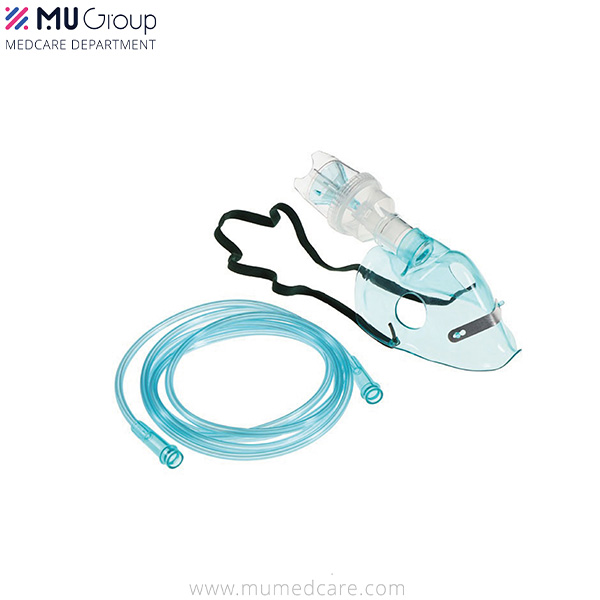
Vetting a respiratory therapy equipment supplier requires a deep dive into their operational infrastructure. Surface-level claims of quality are insufficient. You must validate their regulatory standing, production capabilities, and internal quality control mechanisms.
You must verify ISO 13485 certification. This standard governs Quality Management Systems for Medical Devices. Request the actual certificate and verify its authenticity with the issuing registrar. For the US market, navigate FDA 510(k) clearances. Ensure the specific product code and device class match the manufacturer's registration. European markets require CE marking under the stringent Medical Device Regulation (MDR). Always request and verify independent third-party audit reports. Self-declarations hold little weight in medical device procurement.
Assess the ratio of automated to semi-automated assembly lines. High automation ensures structural consistency and reduces human error. Evaluate their surge capacity meticulously. Respiratory illness seasons, such as flu and RSV outbreaks, cause massive demand spikes. Ask the manufacturer how they scale production during these periods. Do they run multiple shifts? Do they have idle machinery ready for deployment? A reliable partner must demonstrate the ability to absorb volume shocks without extending lead times.
Respiratory consumable manufacturing requires Class 100,000 (ISO Class 8) or higher cleanroom environments. Airborne particulates and microbial contamination pose severe risks to compromised respiratory tracts. Inspect their cleanroom certification and HVAC maintenance logs. The facility must utilize HEPA filtration and maintain positive air pressure to prevent contaminated air from entering the production floor. Workers must wear anti-static gowns, hairnets, and shoe covers.
In-line testing protocols are equally critical. The facility must conduct routine leak testing on mask valves and tubing connectors. Operators submerge the assembled tubing in water tanks and apply compressed air to check for bubbles. Strap tensile strength testing ensures durability during application. Quality control inspectors pull the elastic straps on a calibrated force gauge to verify the ultrasonic welds or mechanical fasteners hold firm. Particulate contamination checks must occur before final sealing. Inspectors use illuminated magnifying stations to check for plastic flash, burrs, or foreign debris inside the mask cavity.
Facility Requirement | ISO Class 8 Cleanroom | Standard Manufacturing |
|---|---|---|
Air Filtration | HEPA filters (99.97% efficiency) | Standard HVAC filters |
Air Changes Per Hour | 10 to 25 changes | 2 to 4 changes |
Particle Limits | Max 100,000 particles (≥0.5 µm) per cubic foot | Uncontrolled |
Worker Attire | Gowns, hairnets, shoe covers, gloves | Standard street clothing |
A manufacturer's engineering flexibility determines their value as a long-term partner. Sourcing an OEM disposable nebulizer mask requires a vendor capable of adapting to specific demographic and regional market demands.
Evaluate the manufacturer's ability to modify mask molds. Demographic needs vary significantly. You may require elongated pediatric masks, contoured adult masks, or infant pacifier-style masks. The supplier must have in-house tooling capabilities to adjust these geometries. Customizing crush-resistant oxygen tubing lengths is another common requirement. Assess their options for standard versus universal connector types to ensure compatibility with various compressor machines.
Designing for patient compliance involves aesthetic and functional modifications. Children respond better to friendly colors or animal-themed designs. Elderly patients benefit from larger, easy-to-grip connectors and softer facial seals. Ask the manufacturer for case studies demonstrating how their design modifications improved the user experience for specific patient populations.
Determine your requirements for sterile versus non-sterile packaging lines. If sterility is required, verify their Ethylene Oxide (EO) sterilization capabilities. Review their degassing procedures to ensure residual EO levels meet safety standards. Integration of custom branding is standard for OEM partnerships. The manufacturer must accurately print your logos on the packaging. They must also manage Instructions for Use (IFUs) in multiple languages. Unique Device Identification (UDI) barcoding is mandatory for traceability. Ensure their printing systems can handle high-resolution UDI barcodes without smudging.
Consolidating your supply chain reduces administrative overhead and freight complexities. A manufacturer with a broad, cross-compatible product portfolio demonstrates advanced engineering capabilities and market maturity.
Assess the manufacturer's ability to supply a complete disposable nebulizer kit with mouthpiece. Complete kits include the mask, medication cup, tubing, and interchangeable mouthpieces. Sourcing all components from a single factory guarantees tight connection tolerances. Evaluate the aerodynamic design of the nebulizer chamber. The internal baffle must generate an optimal Mass Median Aerodynamic Diameter (MMAD) for the medication particles. A well-engineered chamber also ensures minimal residual volume, meaning the patient receives the maximum possible dose.
Portfolio breadth serves as a strong indicator of manufacturing sophistication. Venturi oxygen mask manufacturing requires precise engineering. Evaluate the precision of their color-coded Venturi diluters. These diluters rely on the Bernoulli principle to mix 100% oxygen with room air at specific ratios. The manufacturer must possess deep expertise in fluid dynamics to ensure accurate Fraction of Inspired Oxygen (FiO2) delivery. Even a microscopic plastic burr inside the diluter orifice will alter the air entrainment and deliver the wrong oxygen concentration to the patient.
Consolidate suppliers by choosing a manufacturer capable of producing both standard aerosol masks and high-concentration oxygen delivery systems. This proves they maintain high-tolerance molding equipment and strict quality control over complex assemblies. A factory that can reliably mold a precise Venturi valve will have no problem producing a standard aerosol mask.
Identifying the right partner requires structured benchmarking. You must categorize manufacturers based on their core competencies and historical performance in fulfilling large-scale enterprise contracts.
Categorize top commercial manufacturers by their target markets. Some factories specialize in high-volume hospital procurement. They focus on standard designs, massive output, and low unit margins. Other manufacturers focus on specialized home-care retail. They prioritize ergonomic designs, retail-ready packaging, and pediatric variations. Identify which operational model aligns with your distribution strategy.
Weigh technological innovation and mold precision against unit cost. A slightly higher unit cost is justified if the defect rate is near zero. Evaluate market reputation and financial stability. A financially unstable factory poses a massive supply chain risk. Utilize industry sourcing platforms and specialized medical device reports to validate supplier claims. Cross-reference their stated capacity with their export records.
Evaluation Criteria | Tier 1 Manufacturer | Tier 2 Manufacturer | High-Risk Supplier |
|---|---|---|---|
Regulatory Compliance | Verified ISO 13485, FDA, CE (MDR) | ISO 13485 only | Self-declared or expired certs |
Cleanroom Standard | ISO Class 8 (Class 100,000) | Uncertified enclosed area | No cleanroom environment |
Material Quality | Medical-grade PVC, DEHP-free | Standard PVC, Phthalate presence | Recycled or industrial plastics |
OEM Capabilities | Custom molds, UDI, EO sterilization | Basic logo printing only | No customization available |
Global supply chains remain vulnerable to raw material shortages and logistical bottlenecks. Proactive risk mitigation separates successful procurement strategies from costly failures.
Identify exactly where the manufacturer sources their raw PVC, aluminum nose clips, and elastic straps. Ask for their secondary supplier list. Assess the risk of geographical bottlenecks in their upstream supply chain. If a factory relies on a single region for medical-grade PVC, a localized disruption will halt their production. Redundant raw material sourcing is a mandatory requirement for your final vendor.
Establish realistic expectations for initial tooling and standard production lead times. Custom OEM molds typically add 30 to 45 days to the initial order. Negotiate Minimum Order Quantities (MOQs) that align with your inventory turnover rates. Excessively high MOQs tie up capital, while low MOQs may increase unit freight costs. Evaluate the manufacturer's proximity to major shipping ports. Assess their experience with international freight forwarding and customs clearance. Delays at the port of origin erode your profit margins.
Structure a comprehensive supplier audit before signing any contracts. Virtual audits are acceptable for initial screening, but on-site inspections are strongly recommended for long-term partnerships. Walk the production floor and observe the operators. Are they following standard operating procedures? Are rejected parts properly quarantined in red bins?
Request specific documents during the audit. Review their batch records to verify traceability. You should be able to pick a finished product from the warehouse and trace it back to the specific batch of raw PVC resin. Examine their Corrective and Preventive Action logs to see how they handle internal failures. A factory with zero logged failures is hiding data. Demand raw material Certificates of Analysis to prove they actually purchase medical-grade inputs. The certificate must match the lot numbers on the raw material staging floor.
Choosing a reliable manufacturer requires balancing competitive unit pricing with uncompromising adherence to medical device regulations. Material safety, ergonomic design, and cleanroom production standards cannot be sacrificed for lower costs. Substandard respiratory consumables damage brand reputation and endanger patient health.
Base your final decisions on a weighted matrix. Prioritize verified ISO and FDA compliance. Confirm their cleanroom manufacturing standards through independent audits. Evaluate their portfolio breadth and their ability to provide comprehensive OEM solutions. A factory that controls its own tooling and raw material sourcing will always outperform a simple assembly operation.
Issue a formal Request for Proposal (RFP) to your top three shortlisted vendors.
Request physical product samples to conduct in-house leak testing and strap durability checks.
Execute a documentation audit focusing specifically on CAPA logs and raw material Certificates of Analysis.
Negotiate a small-batch trial order to validate production lead times and logistical efficiency before committing to annual contracts.
A: A reputable manufacturer must hold ISO 13485 certification for medical device quality management. For the US market, they need FDA registration and relevant 510(k) clearances. European distribution requires CE marking under the Medical Device Regulation (MDR). Always demand independent, third-party verification of these certificates.
A: An improper fit allows aerosolized medication to escape into the surrounding air. This reduces the delivered dose to the patient's lungs and compromises treatment. Adjustable aluminum nose clips, contoured edges, and secure elastic straps are necessary to maintain a snug, comfortable seal.
A: Request Certificates of Analysis (CoA) from the manufacturer for all raw materials. The CoA confirms the materials are medical-grade PVC. You must also verify testing reports proving the product is entirely latex-free and DEHP-free to ensure patient safety.
A: Standard industry Minimum Order Quantities typically range from 10,000 to 50,000 units. The exact number depends heavily on the level of customization. Custom molding, unique colors, or specialized private-label packaging usually require higher MOQs to offset initial setup costs.
A: Yes. Top-tier respiratory suppliers offer complete kits. These kits include the mask, medication chamber, crush-resistant tubing, and interchangeable mouthpieces. Sourcing complete kits ensures all components fit together tightly, preventing medication leaks and streamlining your procurement process.
A: Respiratory devices interface directly with a patient's airway. ISO Class 8 cleanrooms prevent particulate and microbial contamination during the molding and assembly process. Manufacturing in a controlled environment prevents introducing pathogens into compromised respiratory tracts.
A: Essential audit components include a thorough Quality Management System documentation review. You must validate their cleanroom certifications and HVAC maintenance logs. Perform batch traceability checks to ensure they can track raw materials. Finally, review their Corrective and Preventive Action history to see how they resolve quality failures.


