- Menu
-
- English


Views: 0 Author: Site Editor Publish Time: 2026-10-09 Origin: Site


Effective aerosolized medication delivery hinges on the physical interface between the patient and the compressor. A poorly designed mask compromises clinical outcomes and wastes expensive pharmaceuticals. Medical procurement teams face a specific challenge. You must balance strict clinical efficacy requirements with operational realities. These requirements include anatomical fit, facial seal, and fine particle delivery. Operational factors involve unit cost, supply chain stability, and strict infection control protocols. Facility purchasing decisions directly impact both patient recovery metrics and nursing labor hours.
This guide provides a technical evaluation framework to help medical buyers source the right Nebulizer Mask and associated equipment. We move beyond basic unit price to assess true clinical and operational value. Procurement professionals will learn how to evaluate material safety, verify component compatibility, and mitigate supply chain risks.
Configuration Dictates Efficacy: The choice between a full mask and a nebulizer kit with mouthpiece directly impacts aerosol deposition rates and is dictated by patient cognitive and physical capabilities.
Material Selection Impacts Compliance: Evaluating medical-grade PVC versus an aerosol chamber with silicone mask requires analyzing facility sterilization capabilities and patient sensitivity (e.g., DEHP-free, latex-free requirements).
System Compatibility is Critical: Procurement must verify standard connector sizing (15mm/22mm) to ensure seamless integration with existing hospital air/oxygen flowmeters, portable compressors, and advanced mesh technologies.
Hidden Costs in Medication Waste: Masks and medication cups with high residual (dead) volume or inefficient nebulization rates increase pharmaceutical waste and prolong treatment times.
Procurement teams must define strict clinical baselines before evaluating vendors. The primary function of any nebulizer system is maximizing the Fine Particle Fraction (FPF). This metric represents the percentage of aerosolized droplets small enough to reach the lower airways. Droplets typically need to be between 1 and 5 microns in diameter. Particles larger than 5 microns tend to impact the back of the throat and are swallowed, offering no respiratory benefit. Particles smaller than 1 micron are often exhaled before they can settle in the lungs. A high-quality mask ensures these optimally sized particles enter the respiratory tract while minimizing fugitive emissions. Fugitive emissions waste medication and expose healthcare workers to aerosolized drugs like albuterol or ipratropium bromide.
Operational baselines require equal attention from purchasing departments. Products must support rapid deployment in emergency settings. Nursing staff need intuitive assembly mechanisms. Complex setups lead to user error and delayed treatments during critical respiratory distress events. Reliable inventory availability is also non-negotiable. Facilities cannot afford stockouts during peak winter respiratory seasons. Sourcing reliable respiratory therapy supplies prevents these dangerous shortages and keeps hospital floors running smoothly.
Workflow impact directly correlates with equipment quality. High-efficiency masks and medication cups reduce standard treatment times. A standard treatment should last 5 to 10 minutes. Inefficient systems drag this out to 15 or 20 minutes. Shorter treatment times directly optimize nursing and respiratory therapist labor hours. When you multiply five saved minutes by thousands of treatments across a hospital system, the operational efficiency gains become massive.
Buyers must navigate the tension between single-use disposability and reusable durability. Single-use items dominate infection control protocols in acute care. They prevent cross-contamination entirely. Reusable items offer sustainability benefits and reduce medical waste volume. Facilities must analyze their internal sterilization capacity before committing to either pathway.
Measure average treatment duration across different hospital wards to establish a baseline.
Track the frequency of equipment-related delays during medication administration.
Calculate the volume of wasted medication due to cup sputtering or mask leakage.
Assess the time nurses spend assembling complex respiratory setups.
Monitor inventory stockout rates during peak winter respiratory seasons.
High-turnover acute care settings rely heavily on the disposable nebulizer mask. Emergency departments and intensive care units require strict single-patient use. This mitigates hospital-acquired infections. Staff discard the mask after the patient's treatment course concludes. This eliminates the need for complex reprocessing workflows and reduces the burden on central sterile services departments.
Material standards dictate clinical safety for these disposable units. Masks must use clear, medical-grade, non-toxic PVC. Clarity allows clinicians to monitor the patient during treatment. Nurses must observe lip color to check for cyanosis and screen for excessive airway secretions. Opaque materials block this vital visual feedback. The PVC must also remain pliable to conform to various facial contours without causing pressure sores on the nasal bridge.
Bulk procurement dynamics drive disposable mask sourcing. Facilities buy these units by the thousands. Storage footprint becomes a primary consideration for supply chain managers. Packaging must be compact. Boxes should stack easily in crowded supply rooms. Buyers must ensure vendors can handle high-volume orders without compromising individual unit quality or packaging integrity.
Chronic care facilities, pediatric wards, and home-care distributors utilize different criteria. They require long-term durability. An aerosol chamber with silicone mask serves this specific use-case. Patients use the same equipment for months. The materials must withstand daily wear and tear without degrading or losing their structural integrity.
Medical-grade silicone offers distinct material advantages over standard plastics. It features excellent structural memory. The mask retains its shape even after prolonged storage in cramped home environments. Silicone provides superior facial sealing compared to standard PVC, which is vital for pediatric patients who may resist treatment. It is also highly autoclavable. Facilities can subject these masks to high-heat sterilization cycles. This ensures complete pathogen destruction between uses.
Buyers evaluate the lifecycle value for reusable units. The upfront procurement cost is higher than disposable PVC. However, repeated sterilization cycles offset this initial investment. Facilities with robust central sterile services departments benefit most from this configuration, as they already have the infrastructure to process reusable medical devices efficiently.
Clinical indications dictate the choice between mouthpieces and full masks. Mouthpieces are generally preferred for targeted lung deposition in compliant adult patients. They bypass the nasal passages entirely. The nasal turbinates naturally filter out particles, which reduces the amount of medication reaching the lungs. A mouthpiece forces mouth breathing, optimizing delivery. It also prevents medication from depositing on the face or in the eyes. Ocular deposition is highly dangerous with certain drugs. Anticholinergic medications can trigger acute glaucoma complications if blown into the eyes. A nebulizer kit with mouthpiece eliminates this risk entirely.
Full masks remain necessary for specific patient populations. Pediatric patients often cannot maintain a tight lip seal on a mouthpiece for 10 minutes. Geriatric patients face similar physical limitations due to muscle weakness or lack of dentition. Cognitively impaired patients require the passive delivery a mask provides. The mask covers both the nose and mouth. It ensures medication delivery regardless of erratic breathing patterns.
Procurement strategy requires balancing these configurations. Buyers should maintain an optimal ratio of both types in their inventory. Historical facility demographic data guides this ratio. A pediatric hospital will skew heavily toward masks. An adult outpatient asthma clinic will prioritize mouthpieces.
Feature | Disposable PVC Mask | Reusable Silicone Mask | Mouthpiece Kit |
|---|---|---|---|
Primary Use Case | Acute care, emergency departments | Chronic care, home-care, pediatrics | Targeted adult therapy, asthma clinics |
Material | Medical-grade PVC | Medical-grade Silicone | Rigid Medical Plastics |
Sterilization | Single-patient use (dispose after use) | Autoclavable, high-heat resistant | Single-patient or cold sterilization |
Ocular Deposition Risk | Moderate (depends on seal quality) | Low (superior facial seal) | None (bypasses face entirely) |
Patient Compliance | High for passive breathing | High for passive breathing | Requires active lip seal coordination |
Masks do not operate in isolation. They must interface with various nebulizer technologies across the hospital. Traditional compressor (jet) nebulizers use pressurized air to shear liquid into an aerosol. They require standard tubing connections. Modern vibrating mesh and ultrasonic models operate differently. They use piezoelectric crystals or vibrating meshes to aerosolize liquid without requiring a separate air compressor.
Portable mesh and ultrasonic nebulizers often feature integrated medication chambers. They do not use standard long tubing. The mask attaches directly to the device body. Buyers must source specific mask attachments for these units. Standard hospital masks will not fit integrated portable devices, leading to equipment mismatch and delayed patient discharge.
Procurement consolidation is a major goal for supply chain directors. Buyers seek universal masks. These masks adapt to heavy-duty hospital wall-gas systems. They also fit hand-held portable devices used for discharge planning. Standardized connectors reduce inventory complexity. They prevent staff from searching for adapters during critical care moments.
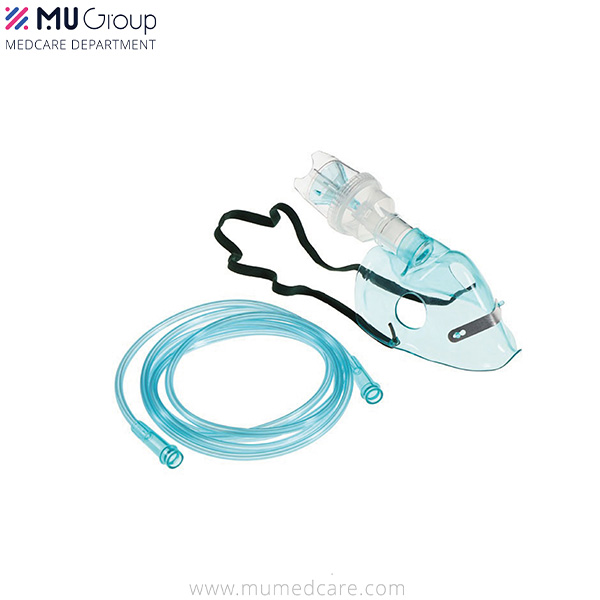
Buyers must understand the complete anatomy of aerosol delivery. Sourced parts must interoperate seamlessly. The system includes the compressor unit, medication chamber, tubing system, and the patient interface. Mismatched components cause air leaks. Air leaks drastically reduce medication delivery rates and alter the prescribed dosage.
Verification of standard ISO connectors is mandatory. Industry standards dictate a 22mm outer diameter and a 15mm inner diameter for respiratory fittings. Adhering to this ISO standard prevents adapter dependencies. Adapters introduce additional failure points. They also increase inventory management burdens. Universal sizing guarantees the mask fits the medication cup perfectly every time.
Tubing specifications require rigorous evaluation. Standard smooth tubing kinks easily. Kinks block airflow and halt treatments immediately. Buyers must specify crush-resistant tubing. This is often called star-lumen tubing. The internal cross-section resembles a star. It maintains continuous airflow even if bent. It functions perfectly even if compressed under a patient's weight or trapped in bed rails.
Assess compatibility with varying pressure sources. Hospital wall gas outlets typically deliver 50 psi. Portable home compressors operate at much lower pressures. The medication cup and mask baffles must atomize liquid efficiently across this entire pressure spectrum to ensure consistent therapy from the ICU to the patient's living room.
The medication cup houses the liquid drug. Its internal design dictates delivery efficiency. Buyers must analyze residual volume metrics. Residual volume is the medication left in the cup after sputtering begins and aerosolization stops. Lower residual volume equals higher drug delivery efficiency. High residual volume wastes expensive pharmaceuticals and under-doses the patient.
Usability for medication loading impacts nursing workflows. Busy clinical staff prepare medications rapidly. Spill-proof chambers are essential. Easy-fill designs prevent costly pharmaceutical spills. A spilled dose requires a complete restart. This wastes medication, requires new pharmacy orders, and consumes valuable staff time.
Evaluate nebulization rates carefully. Cups must deliver medication efficiently. The standard clinical benchmark for a treatment is 5 to 10 minutes. Slow nebulization rates frustrate patients. They also delay nurses from attending to other duties. The baffle design inside the cup controls this atomization speed and determines the particle size distribution.
Angle-independent operation is a critical feature. Bedridden or reclining patients cannot sit perfectly upright. The nebulizer cup must function at tilts up to 45 degrees. Cups that only work vertically will fail in intensive care settings. Gravity-dependent designs cause sputtering, incomplete dosing, and extended treatment times.
Assess capacity limits based on standard pharmacology. Typical bronchodilator and corticosteroid dosages require specific volumes. Standard cup capacity requirements range from 6cc to 8cc. Undersized cups require nurses to split doses. Oversized cups may fail to nebulize small volumes effectively, leaving too much drug trapped in the dead space.
A snug fit over the nose and mouth is essential. Poorly fitting masks leak aerosolized medication. Leakage reduces the prescribed dose reaching the lungs. It also directs medication into the eyes. As mentioned, this causes severe complications with specific drugs. A tight seal guarantees therapeutic efficacy and protects the patient's vision.
Analyze anatomical contouring during the evaluation phase. Mask designs must accommodate diverse facial structures. A rigid mask causes pressure injuries on the nasal bridge. Flexible edges maintain a snug seal without damaging skin tissue. Pediatric masks require entirely different contouring than adult geriatric masks to account for flatter nasal bridges and smaller jawlines.
Evaluate exhalation vent engineering. Patients exhale continuously during treatment. Vents must clear carbon dioxide rapidly. Poor ventilation leads to CO2 rebreathing. This causes patient distress, elevated heart rates, and dizziness. Vents must direct exhaled aerosols away from healthcare workers. Directional venting protects staff from occupational drug exposure.
Assess strap mechanisms for safety and durability. Securing straps must offer high elasticity. They need wide adjustability to fit varying head sizes securely. Latex-free certification is absolutely mandatory. Latex allergies trigger severe anaphylactic reactions. Facilities cannot risk exposing patients to latex components under any circumstances.
Procurement teams constantly compare generic imports against branded respiratory supplies. Generic imports often present a lower unit cost. However, branded supplies usually provide verified clinical data. Buyers must demand independent particle size distribution reports. Claims of high FPF must be backed by laboratory testing, not just marketing brochures.
Calculate the hidden costs of poor quality. A cheap mask that leaks increases treatment times. It causes higher medication waste. Staff spend excessive time troubleshooting poor fittings. Nurses forced to hold a leaking mask against a patient's face cannot perform other duties. These operational inefficiencies quickly erase any upfront unit cost savings achieved during the initial purchase.
Mandatory certifications serve as the first vendor filter. U.S. markets require verification of FDA 510(k) clearance. European markets demand CE marking. Global manufacturing must adhere to ISO 13485 standards. These certifications prove the vendor operates a controlled, audited quality management system capable of producing consistent medical devices.
Material safety documentation is equally critical. Buyers must request Certificates of Analysis (CoA). These documents prove the exact chemical composition of the plastics. Products must be phthalate-free. Specifically, they must be DEHP-free. DEHP is a plasticizer linked to endocrine disruption. Latex-free declarations must also accompany every shipment to protect vulnerable patient populations.
Proprietary nebulizer systems create sole-source dependency risks. If a facility buys a machine that only accepts one specific mask brand, they are trapped. A supply chain disruption at that single vendor halts respiratory therapy across the hospital. Lock-in ecosystems pose severe operational threats to patient care.
Dual-sourcing strategies mitigate this risk. Facilities should purchase standardized, universally compatible masks and tubing. This allows procurement to switch vendors instantly if shortages occur. Standard ISO connectors make dual-sourcing possible and protect the hospital from regional manufacturing delays.
Evaluate vendor safety stock levels before signing contracts. Ask about domestic warehousing capabilities. Offshore shipping delays cannot impact hospital inventory. Review the vendor's historical fulfillment rates during peak respiratory seasons. Winter months strain respiratory supply chains globally. Vendors must prove they can handle seasonal demand spikes without placing facilities on backorder.
Standardizing a new mask design introduces clinical risks. Staff resistance is common when workflows change. Improper assembly leads to equipment failure. If a nurse connects the tubing incorrectly, the patient receives no medication. Training gaps directly impact patient safety and treatment efficacy.
Mitigation requires proactive vendor partnerships. Request comprehensive Instructions for Use (IFUs). Demand in-service training materials and video guides. Conduct controlled pilot rollouts before facility-wide adoption. Test the new masks in a single department first. Gather staff feedback, adjust training protocols, and then expand the rollout across the entire hospital system.
The optimal nebulizer mask balances anatomical fit for the patient with standardized components for the facility. Procurement teams must look past initial unit costs to evaluate clinical efficacy and operational workflows. High-quality materials, universal ISO connectors, and efficient medication cups drive better patient outcomes and reduce nursing labor.
Filter out vendors lacking transparent material safety certifications or those using proprietary connectors.
Request physical samples of masks and tubing for hands-on clinical evaluation by respiratory therapists.
Review independent particle size distribution data to verify claims of high Fine Particle Fraction delivery.
Audit the vendor's supply chain redundancy and domestic warehousing capabilities to ensure seasonal stability.
A: Disposable masks use medical-grade PVC for single-patient applications. They prevent cross-contamination in high-turnover acute care settings. Reusable silicone masks withstand repeated autoclave sterilization cycles. Facilities use them for chronic care or pediatric wards. Silicone offers a longer lifespan and superior seal but requires strict sterilization protocols.
A: Facilities specify mouthpieces for targeted lung deposition in compliant adult patients. Mouthpieces bypass the nasal passages entirely. This prevents medication from depositing on the face or in the eyes. It is essential for administering anticholinergic drugs, which can trigger severe ocular complications if leaked from a mask.
A: Traditional compressors use standard 22mm/15mm tubing connectors compatible with universal masks. Portable mesh and ultrasonic nebulizers often feature integrated medication chambers directly on the device body. These require specific, proprietary mask attachments rather than standard tubing setups. Buyers must match the mask interface to the specific machine type.
A: Exhalation vents allow patients to clear carbon dioxide rapidly, preventing dangerous CO2 rebreathing. Proper vent placement maintains internal mask pressure for optimal aerosol inhalation. Furthermore, directional vents guide exhaled fugitive emissions away from healthcare workers, reducing occupational exposure to aerosolized pharmaceuticals.
A: Buyers must verify FDA 510(k) clearance for the US market or CE marking for Europe. Manufacturing facilities should hold ISO 13485 certification. Additionally, buyers should demand Certificates of Analysis proving the products are 100% latex-free and DEHP-free to ensure patient safety and prevent allergic reactions.
A: Standard smooth tubing can kink easily, blocking airflow and halting the breathing treatment. High-quality respiratory setups use crush-resistant or star-lumen tubing. The internal star-shaped cross-section maintains a continuous air channel. This ensures uninterrupted airflow even if the tubing is bent, stepped on, or compressed under the patient.
A: Treatment duration depends on the medication cup's nebulization rate, the compressor's pressure output, and the mask's seal quality. Efficient baffle designs atomize liquid faster, while a tight facial seal ensures the patient inhales the maximum dose per breath, keeping treatments within the standard 5 to 10-minute window.


